Getting Started with Drone Photography
Drones have made aerial photography accessible to everyone. Modern consumer drones pack incredible cameras, intelligent flight modes, and obstacle avoidance into compact, portable packages. But flying well and capturing great footage takes practice, preparation, and the right gear.
Choosing Your First Drone
For photography and video, you want a drone with a **gimbal-stabilized camera** that shoots at least 4K. The DJI Mini series is the sweet spot for beginners — they're under 250g (no FAA registration required for recreational use in many cases), incredibly stable, and produce professional-quality footage.
Essential Accessories
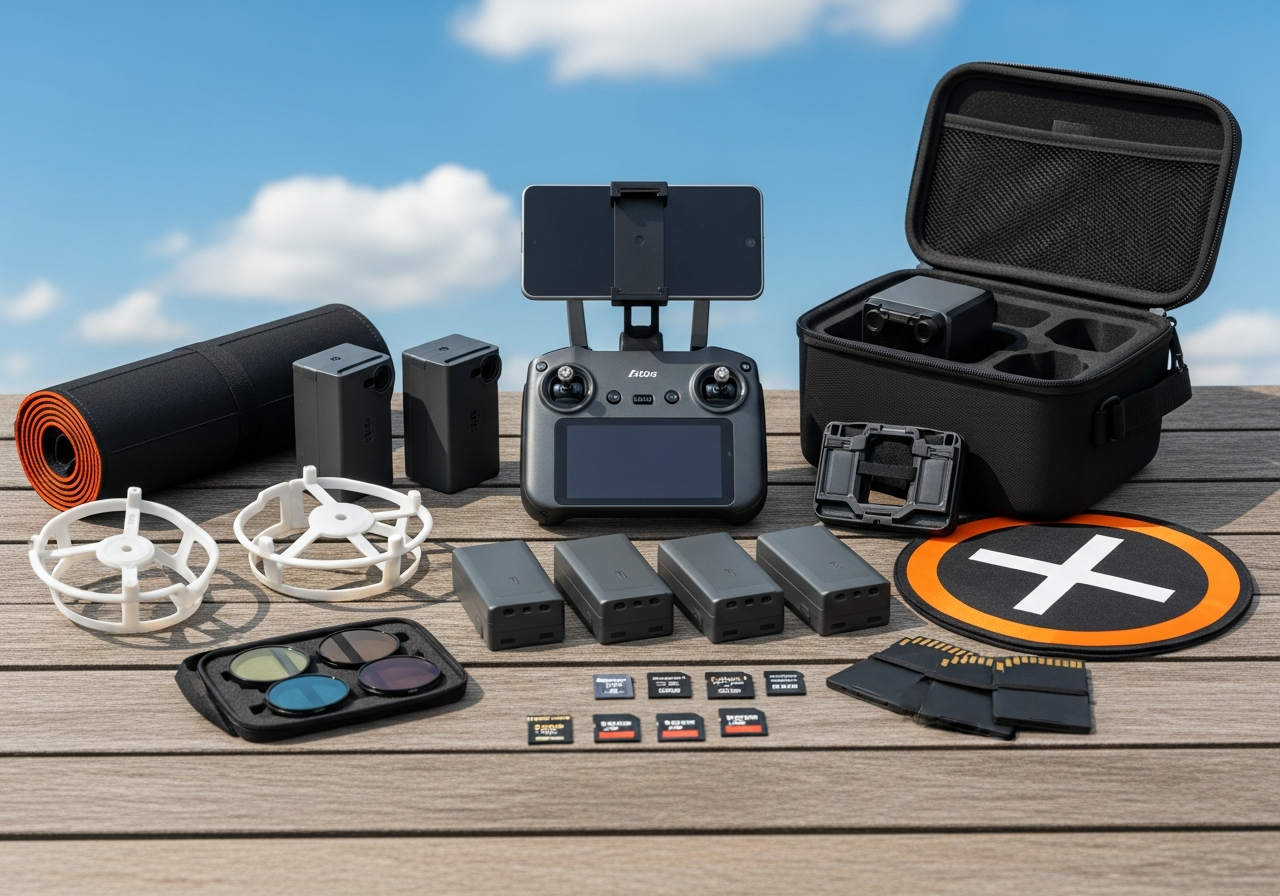
Extra **batteries** are a must — most drones only fly for 25-35 minutes per charge. A **landing pad** gives you a clean takeoff and landing surface. **ND filters** are the sunglasses for your drone camera, letting you control exposure and get cinematic motion blur. And a **carrying case** protects your investment during transport.
Tips for Better Aerial Shots
- Always check local regulations and airspace restrictions before flying
- **Fly in calm weather** — wind is the enemy of smooth footage
- Use the rule of thirds and look for leading lines from above
- Fly slowly and smoothly — jerky movements ruin footage
- Shoot during golden hour for the most dramatic lighting
Common Mistakes to Avoid
- Flying in restricted airspace without checking apps like B4UFLY
- Not calibrating the compass before each flight
- Ignoring battery warnings and pushing flight time limits
- Flying too high when the best compositions are often at 50-200 feet