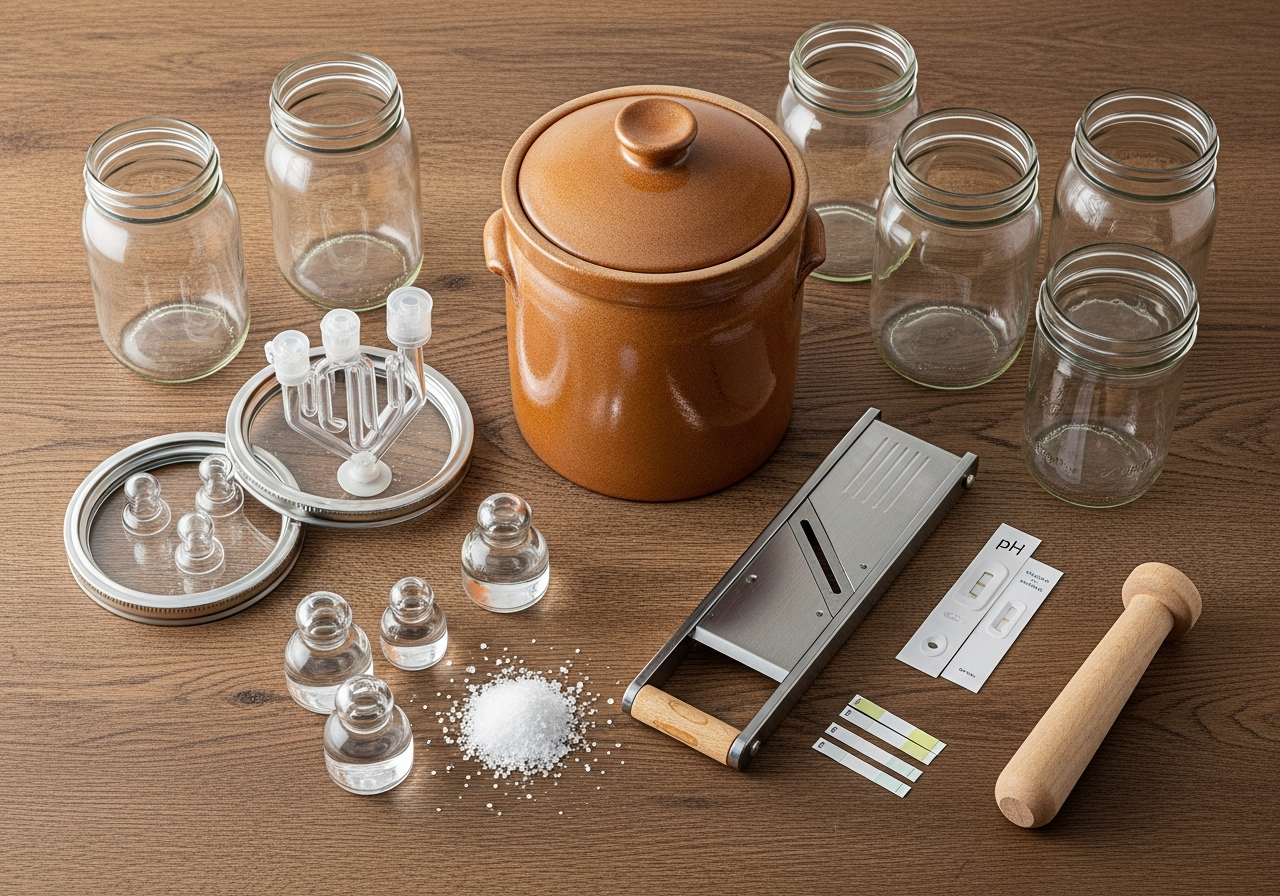
Getting Started with Fermentation
Fermentation is the art of letting beneficial bacteria transform simple ingredients into something extraordinary. Sauerkraut, kimchi, pickles, hot sauce — they're all products of lacto-fermentation, where naturally present Lactobacillus bacteria convert sugars into lactic acid, preserving the food and creating complex, tangy flavors.
The Beauty of Simplicity
At its core, fermentation requires just three things: **vegetables, salt, and time**. Submerge vegetables in a saltwater brine (or pack them with dry salt until they release their own liquid), keep them below the surface, and wait. In a few days to a few weeks, beneficial bacteria do all the work.
Essential Equipment
While you could ferment in any jar, proper equipment makes it easier and more consistent. **Wide-mouth mason jars** are the standard vessel. **Fermentation lids with airlocks** let CO2 escape without letting oxygen in. **Glass weights** keep vegetables submerged under the brine. And a **kitchen scale** ensures accurate salt ratios.
Tips for Successful Ferments
- Use **non-iodized salt** — iodine inhibits the beneficial bacteria
- Keep vegetables fully submerged under the brine at all times
- Ferment at room temperature (65-75°F) — too warm and things go too fast, too cold and nothing happens
- Taste daily after day 3 — move to the fridge when it reaches your preferred tanginess
- Start with simple sauerkraut or dill pickles before tackling kimchi
Common Mistakes to Avoid
- Using chlorinated tap water — it can kill the bacteria you're trying to cultivate
- Not using enough salt — 2-3% by weight is the sweet spot
- Opening the jar constantly — each time introduces oxygen
- Panicking about harmless Kahm yeast on the surface — skim it off and carry on