Why Film Photography is Making a Comeback
In an age of instant digital photos, film photography forces you to slow down and be intentional with every frame. Each roll gives you 24 or 36 shots — no chimping, no deleting, no endless burst mode. The result is a more mindful approach to photography that often produces images with a character digital can't quite replicate.
Choosing Your First Film Camera
You don't need to spend a fortune. Classic 35mm SLRs like the Canon AE-1 and Pentax K1000 are beloved by beginners for their full manual controls, reliable mechanics, and abundant availability on the used market. Point-and-shoot cameras like the Olympus Stylus are great for everyday carry.
Getting Into Home Development
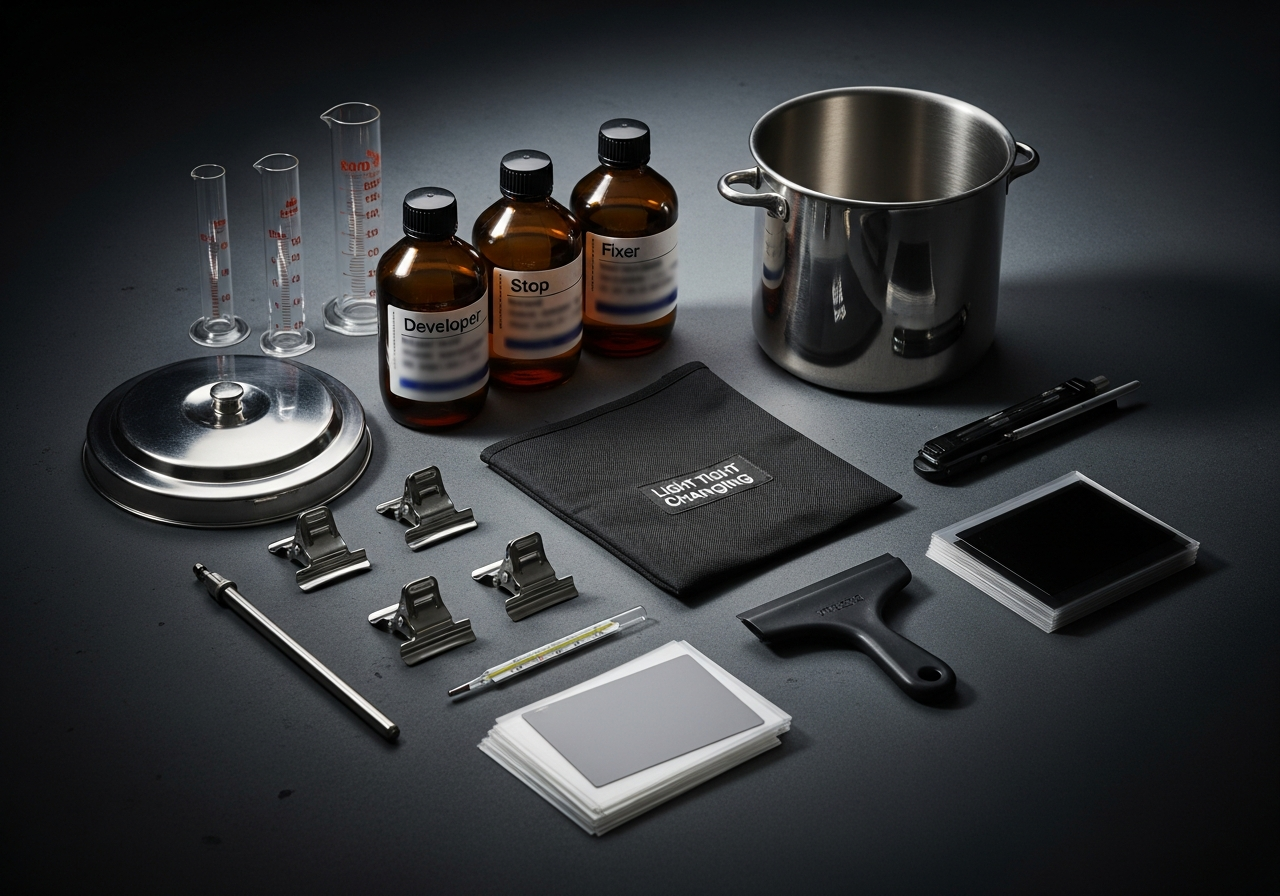
Developing black-and-white film at home is surprisingly simple and deeply satisfying. You need a **developing tank**, **chemistry** (developer, stop bath, fixer), and a **changing bag** for loading film in the dark. The entire process takes about 20 minutes once you get the hang of it.
Tips for Film Beginners
- Start with **ISO 400 black-and-white film** — it's versatile and forgiving
- Learn the exposure triangle: aperture, shutter speed, ISO
- Keep a shot log noting settings for each frame so you can learn from results
- Bracket your exposures (shoot at suggested, +1, and -1 stop)
- Scan your negatives with a flatbed scanner or dedicated film scanner
Common Mistakes to Avoid
- Opening the camera back before the film is fully rewound
- Forgetting to set the ISO dial to match your film speed
- Rushing the development process — temperature and timing matter
- Not fixing for long enough — under-fixed negatives will fade over time