Getting Started with Home Brewing
Home brewing has never been more accessible. With a basic equipment setup and a good ingredient kit, you can produce beer that rivals your favorite craft brewery. The process is straightforward: boil wort, add hops, cool, pitch yeast, ferment, and bottle. Each batch teaches you something new.
Essential Brewing Equipment
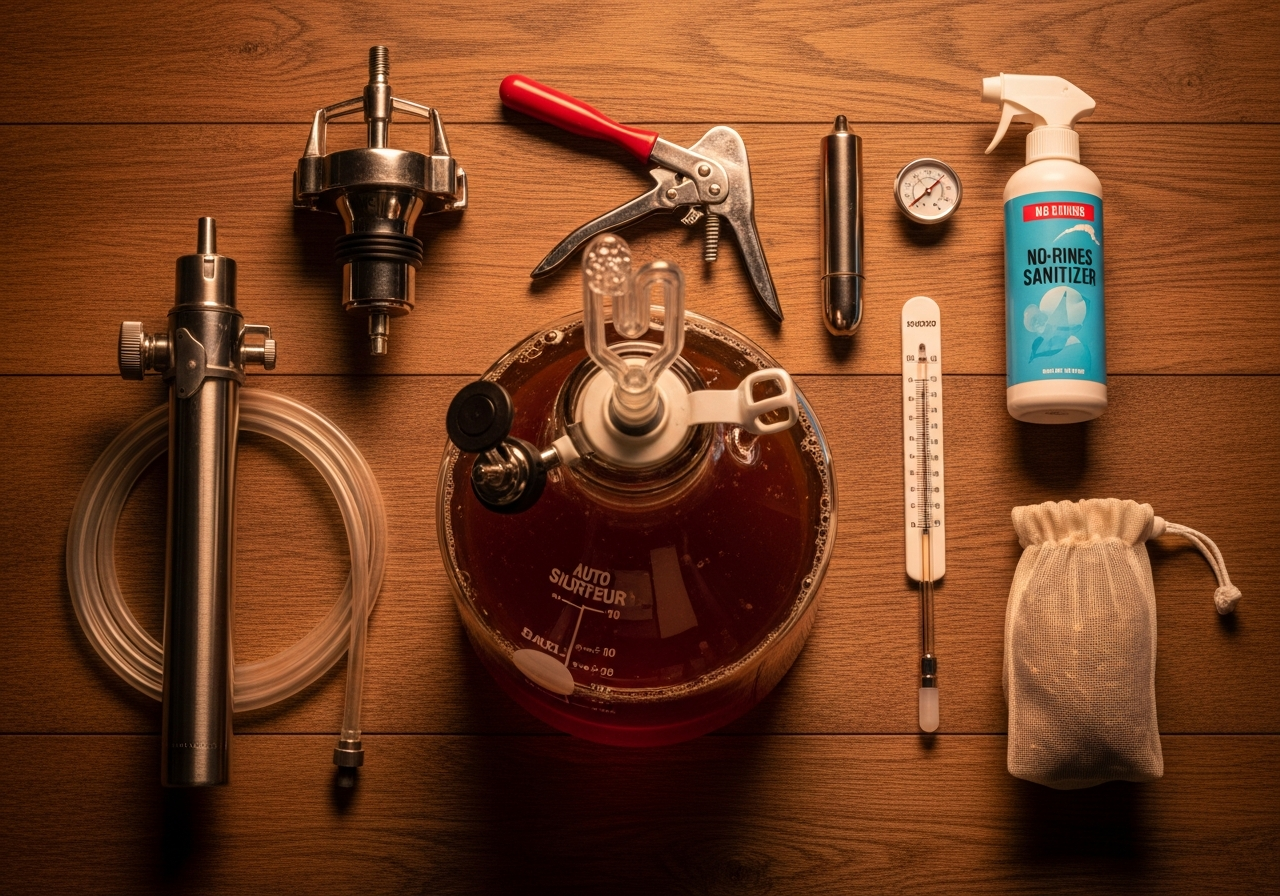
The centerpiece of your setup is a **fermenter** — either a food-grade bucket or a glass carboy. You'll need a **brew kettle** large enough to boil at least 3 gallons, an **airlock** to let CO2 escape during fermentation, and a **hydrometer** to measure alcohol content. A good **sanitizer** is arguably the most important item — contamination is the number one cause of bad homebrew.
Tips for Your First Brew Day
- **Sanitize everything** that touches your beer after the boil — this is the golden rule
- Start with an extract kit rather than all-grain — it simplifies brew day significantly
- Use a thermometer to ensure you pitch yeast at the right temperature (65-72°F for ales)
- Be patient during fermentation — two weeks minimum before bottling
- Keep detailed notes so you can replicate or improve your recipe
Common Home Brewing Mistakes
- Not sanitizing thoroughly — infections ruin entire batches
- Bottling too early before fermentation completes — this causes bottle bombs
- Fermenting at too high a temperature — produces off-flavors
- Skipping the hydrometer readings — you won't know when fermentation is done