Getting Started with Homeschooling
Starting homeschool can feel overwhelming — there are endless curriculum choices, supplies to buy, and schedules to plan. Take a deep breath. You don't need to replicate a classroom at home. The beauty of homeschooling is flexibility, and starting simple is the best approach.
Setting Up Your Homeschool Space
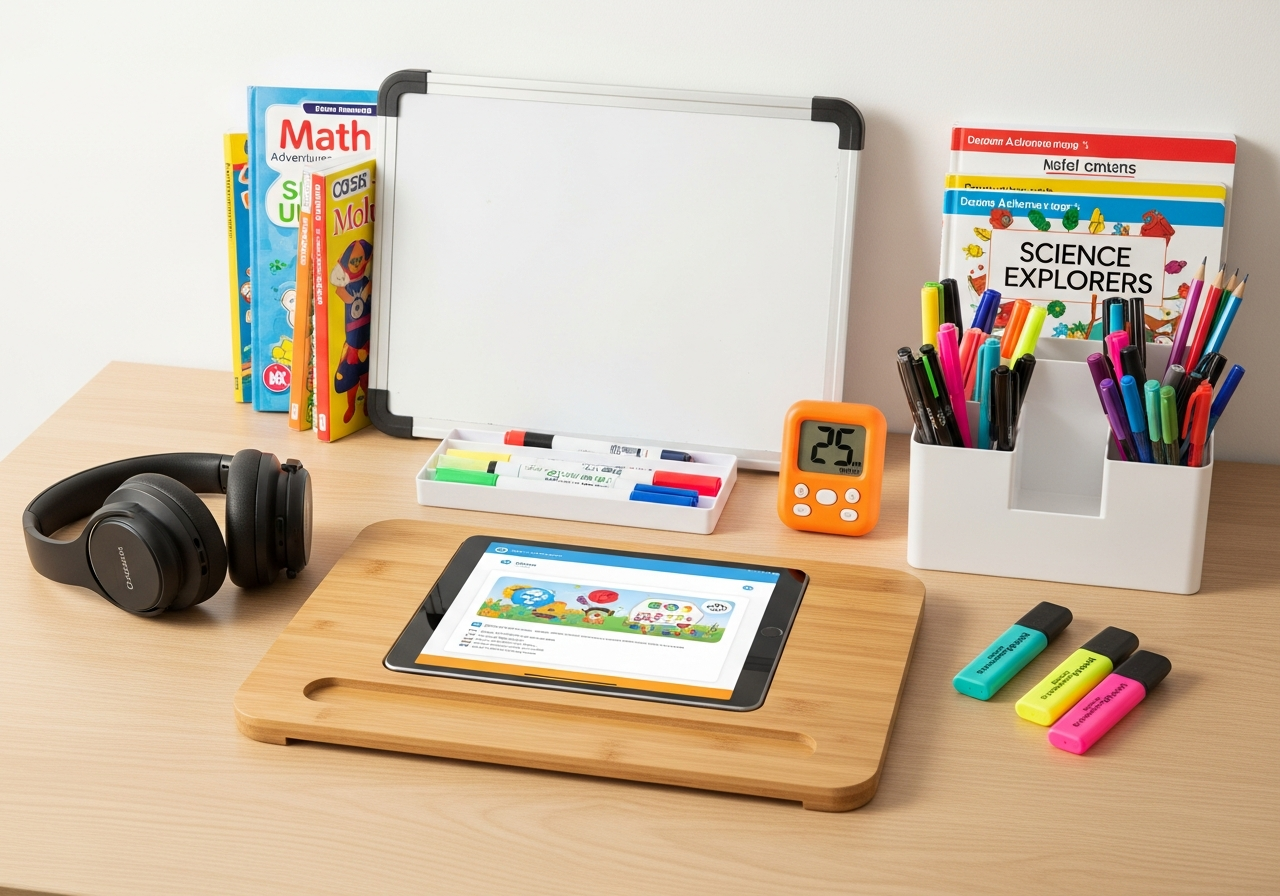
You don't need a dedicated classroom — a clean table, good lighting, and organized supplies are enough. A **whiteboard** is incredibly useful for daily schedules, math problems, and brainstorming. **Storage bins** and a **filing system** keep materials organized and accessible. Make the space inviting so your child associates it with positive learning.
Essential Supplies
- A **planner or lesson plan book** to map out your weeks and track progress
- **Basic school supplies** — notebooks, pencils, colored pencils, scissors, glue
- A **laminator** for reusable worksheets and flashcards
- **Hands-on manipulatives** for math and science (base-ten blocks, magnets, measuring tools)
- A **globe or wall map** for geography and context
Curriculum Tips
- Start with your state's requirements — know what you're legally obligated to cover
- **Don't buy everything at once** — try free resources first to find what works
- Mix textbook learning with hands-on projects and real-world experiences
- Follow your child's interests — engagement matters more than rigid schedules
- Join local homeschool groups for community and shared resources
Common Mistakes
- Trying to do too much too fast — start with core subjects and build
- Comparing your homeschool to traditional school — they're different by design
- Spending too much on curriculum before testing it
- Forgetting to schedule breaks and free play
Start with these essentials and build your homeschool around what works best for your family.