Why Journaling Is Powerful for Mental Health
Journaling isn't just writing — it's a form of self-therapy. Research shows that expressive writing reduces anxiety, improves mood, and even strengthens your immune system. Whether you're processing a tough day or setting intentions for tomorrow, putting pen to paper creates clarity you can't get from scrolling your phone.
Types of Journals That Help
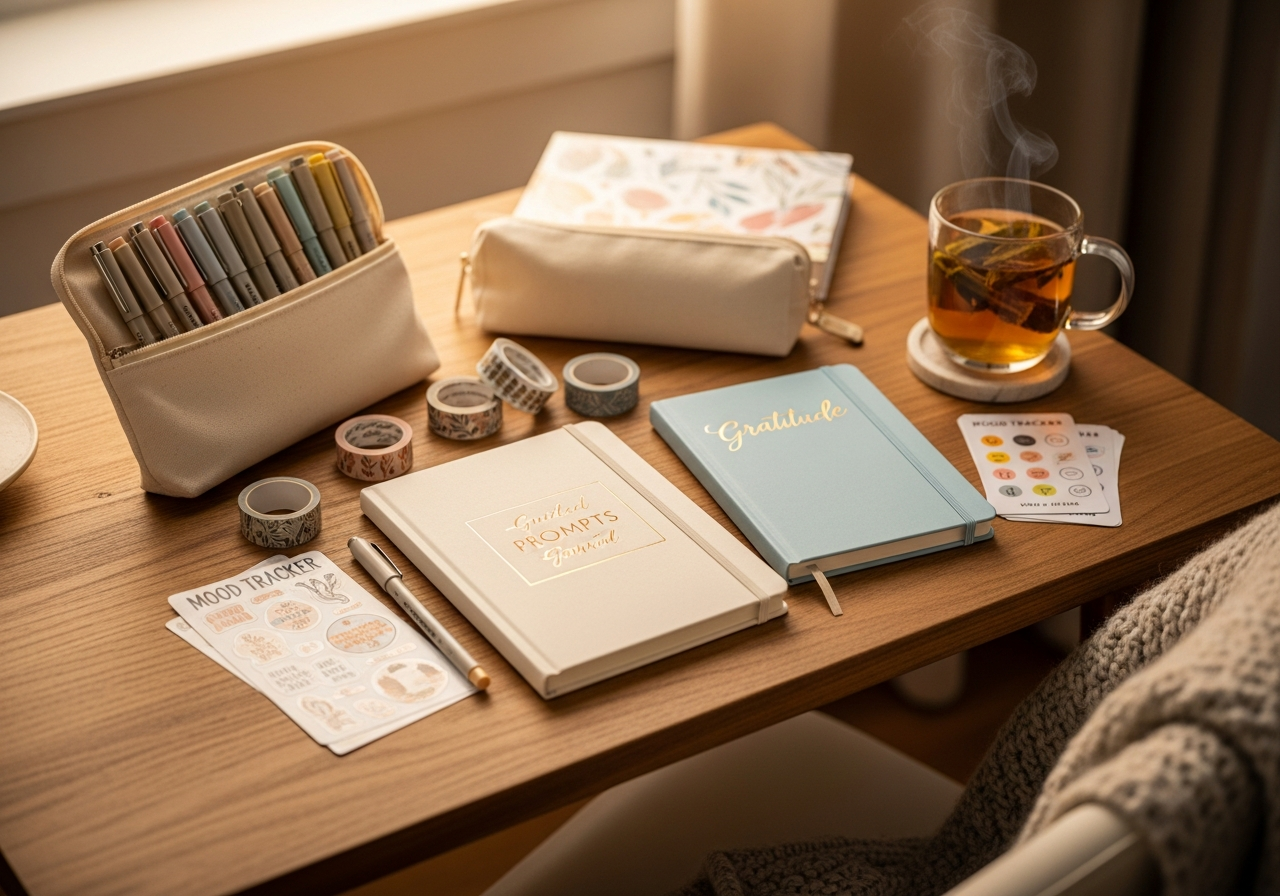
Different journals serve different purposes. A **prompt journal** gives you daily questions to answer, taking the pressure off blank-page anxiety. A **gratitude journal** trains your brain to notice the good in your life. A **mood tracker** helps you identify emotional patterns over time. Many people benefit from combining two or three styles.
Tips for Building a Journaling Habit
- Start with just 5 minutes a day — consistency matters more than length
- **Write at the same time each day** — morning pages or evening reflection both work
- Don't edit yourself — let thoughts flow without judgment
- Use prompts when you're stuck — they eliminate the "what do I write?" barrier
- Decorate your journal with stickers and washi tape to make it feel personal and inviting
Common Mistakes to Avoid
- Trying to write perfectly — this isn't an essay, it's for your eyes only
- Setting unrealistic goals like "I'll write 3 pages every day"
- Comparing your journal to aesthetic ones on social media
- Giving up after missing a few days — just pick it back up
This kit gives you everything to start a journaling practice that genuinely supports your mental health.