Getting Started with Leather Crafting
Leather crafting is one of the most rewarding hands-on hobbies you can learn. Unlike many crafts, the things you make are genuinely useful — wallets, belts, bags, and accessories that last a lifetime and develop beautiful patina with age. The basics are surprisingly simple: cut, punch, stitch, and finish.
Essential Tools for Leather Work
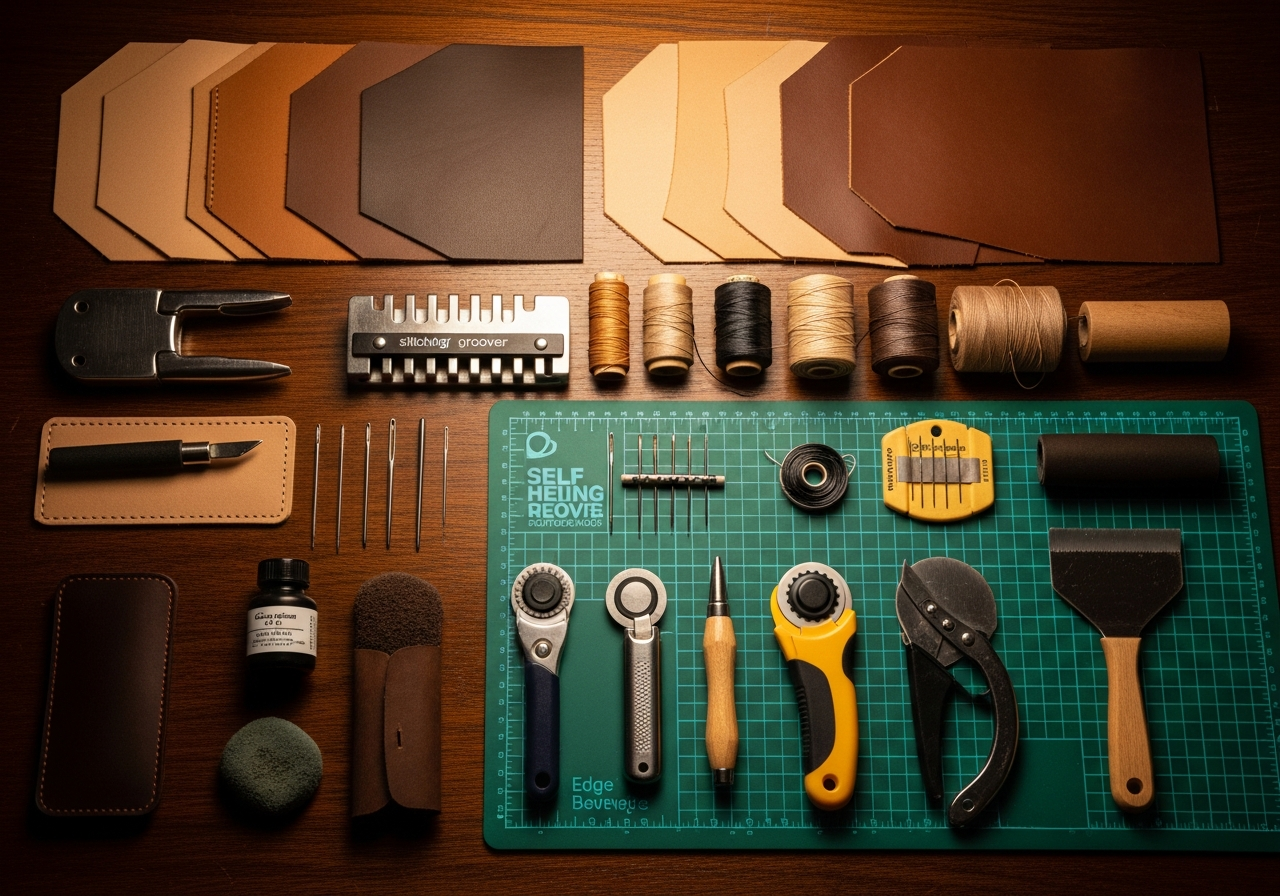
A sharp **rotary cutter or utility knife** is your most important tool — clean cuts are the foundation of good leatherwork. **Stitching chisels** (also called pricking irons) punch evenly spaced holes for hand-stitching with a **saddle stitch** — the strongest stitch in leatherwork. A **cutting mat** protects your table and extends blade life. And **waxed thread** with two needles is how you sew leather by hand.
Tips for Beginners
- Start with vegetable-tanned leather in 3-4 oz weight — it's the most versatile for small goods
- **Practice on scrap leather** before cutting into your project piece
- Use binder clips to hold pieces together while stitching
- Burnish edges with water or gum tragacanth for a professional finish
- Watch YouTube tutorials from Corter Leather or Weaver Leathercraft
Common Mistakes to Avoid
- Using dull blades — they tear rather than cut, ruining edges
- Stitching holes too close to the edge — leather tears under stress
- Skipping edge finishing — raw edges look amateurish
- Buying chrome-tanned leather for tooling projects — it won't hold impressions