Getting Started with Model Rocketry
Model rocketry combines engineering, physics, and the pure thrill of watching something you built soar into the sky. It's a fantastic hobby for all ages and a great way to learn about aerodynamics, propulsion, and Newton's laws through hands-on experimentation.
Essential Rocketry Equipment
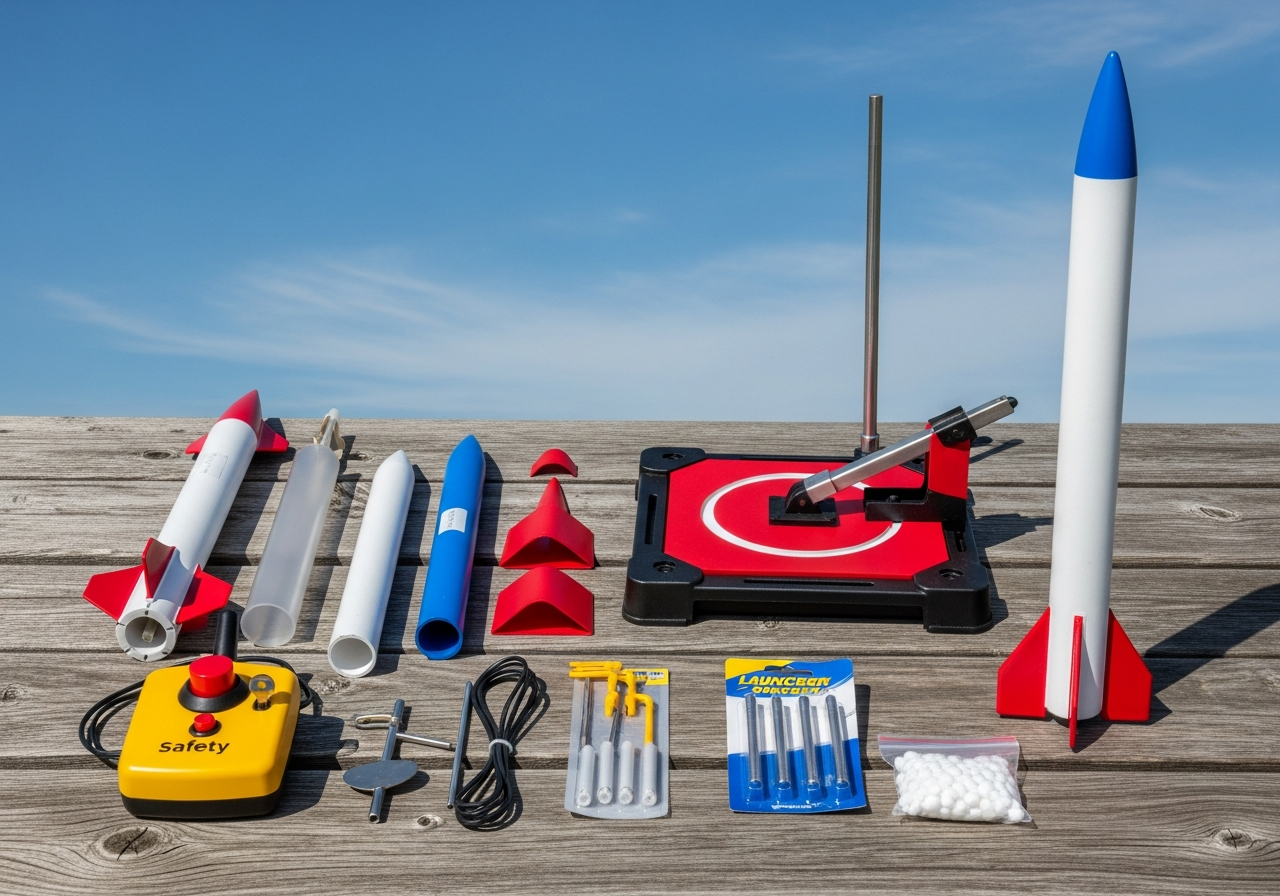
A **starter rocket kit** is the best way to begin — these come with pre-designed components that snap or glue together. You'll need **rocket engines** (also called motors) which come in different thrust levels. A **launch pad and controller** provide a stable, safe launching platform. **Recovery wadding** protects the parachute from engine ejection heat. And extra **parachutes** are always good to have since they occasionally get stuck in trees.
Tips for Successful Launches
- **Start with a simple, low-power rocket** before moving to advanced designs
- Always launch in open fields away from buildings, trees, and power lines
- Check wind conditions — calm days are best for straight flights and easy recovery
- Read and follow the **NAR Model Rocketry Safety Code**
- Apply thin coats of glue and let each dry completely for the strongest bonds
- Angle your launch rod slightly into the wind for more predictable flights
Common Mistakes to Avoid
- Launching near obstacles — rockets can drift hundreds of feet during descent
- Skipping recovery wadding — it protects the parachute from burning
- Using too powerful an engine for a lightweight rocket — it can fly out of sight
- Not checking engine compatibility with your rocket model
- Forgetting to pack the parachute properly — fold carefully for reliable deployment