Getting Started with Pottery at Home
You don't need a pottery wheel or a kiln to start making ceramics. Hand-building is the oldest and most accessible approach to pottery, and many professional potters prefer it. Techniques like pinch pots, coil building, and slab construction let you create beautiful functional and decorative pieces with just your hands and a few basic tools.
Essential Pottery Tools
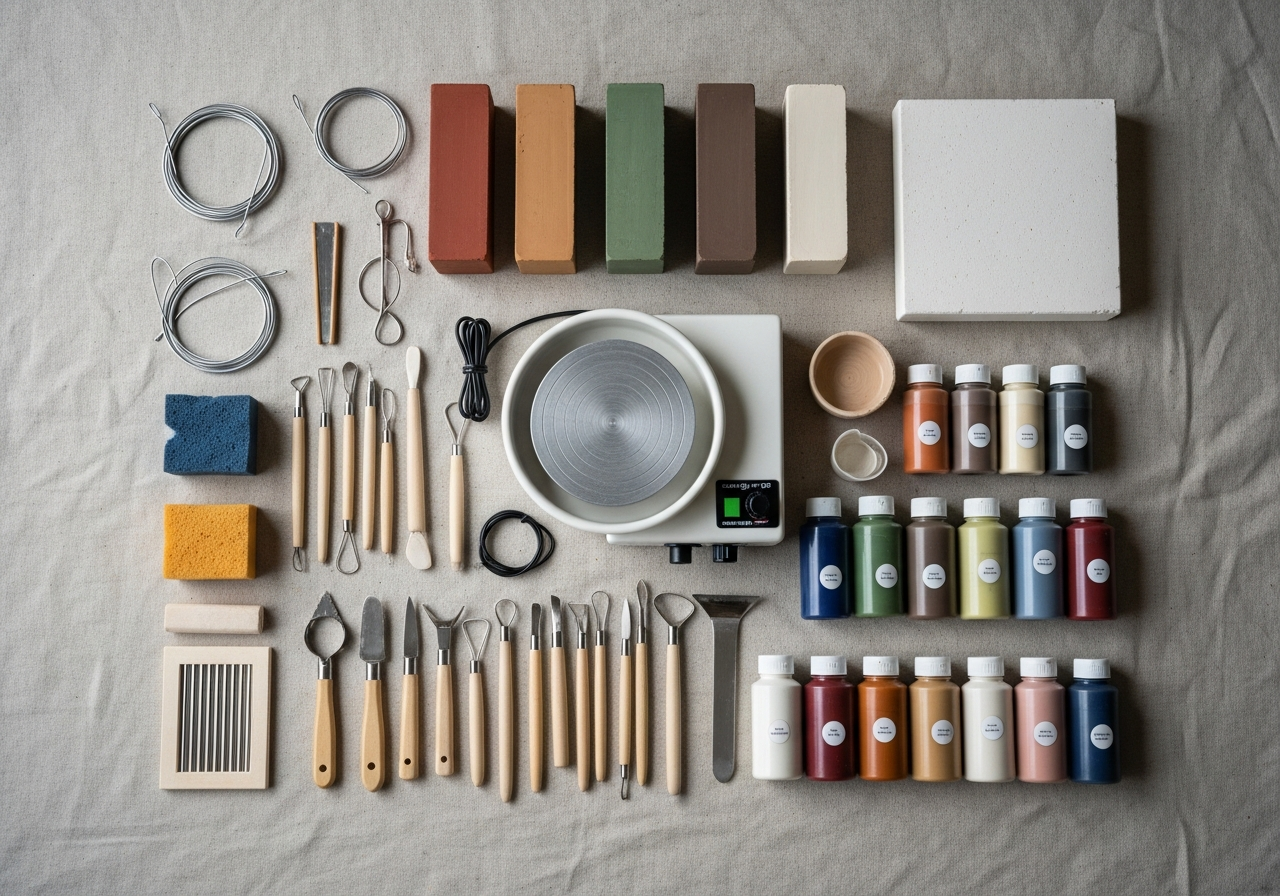
A good **pottery tool set** includes wire cutters, ribs, loop tools, and modeling tools for shaping and smoothing. Quality **clay** is the foundation — air-dry clay is perfect for beginners since it doesn't require kiln firing. A **rolling pin with guide sticks** helps you roll even slabs. And a **sponge set** keeps your clay moist while working and smooths surfaces before finishing.
Tips for Beginning Potters
- Start with **air-dry clay** to learn techniques without needing kiln access
- Keep your clay moist while working — cover unused portions with a damp cloth
- Score and slip when joining two pieces of clay — it's the glue of pottery
- Let pieces dry slowly and evenly to prevent cracking
- Experiment with textures using found objects: forks, fabric, stamps, leaves
Common Pottery Mistakes
- Joining clay pieces without scoring and applying slip — they'll crack apart
- Making walls too thin — they collapse or crack during drying
- Drying pieces too quickly — cover loosely with plastic for slow, even drying
- Not wedging clay before use — air bubbles cause cracking