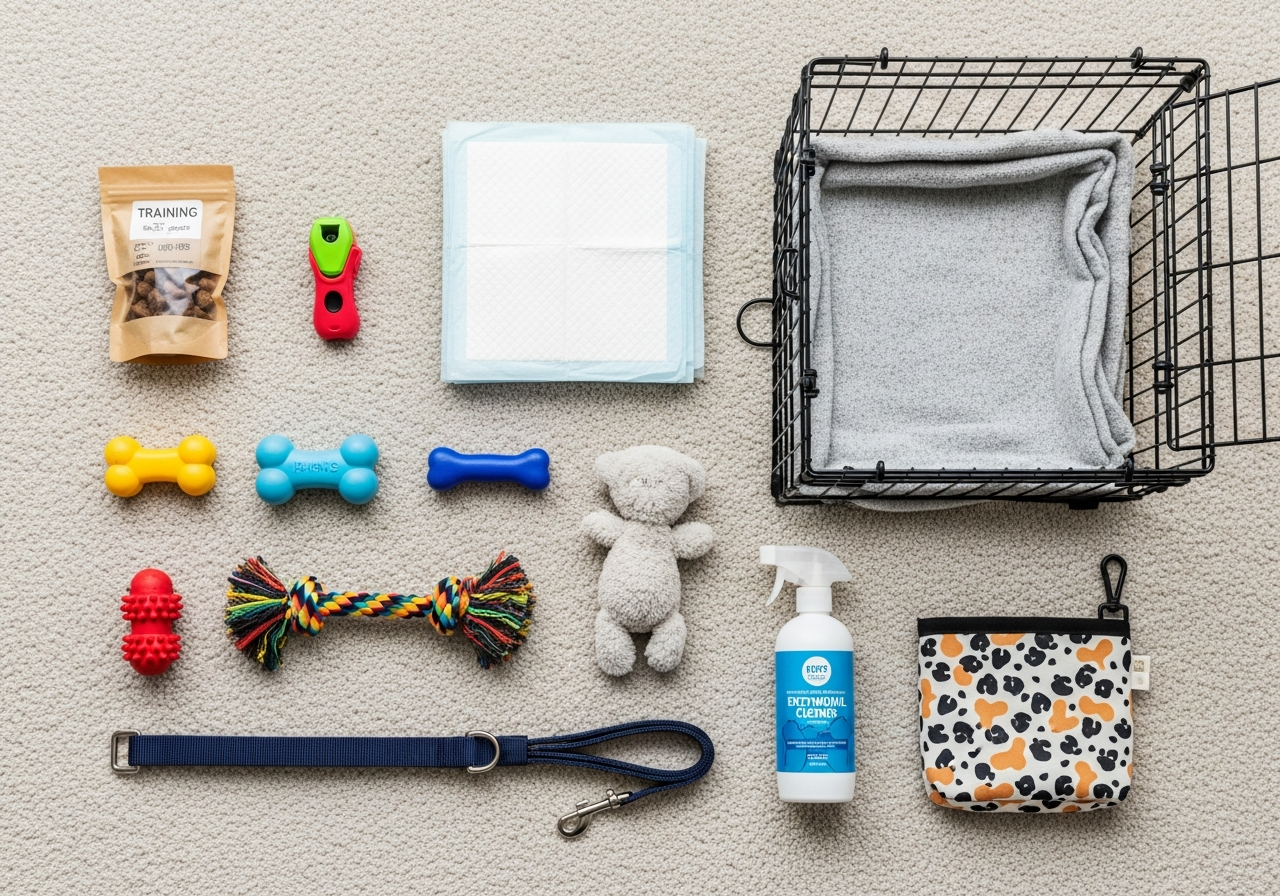
Puppy Training Essentials: Setting Up for Success
The first few weeks with a new puppy set the foundation for years of good behavior. Consistent training, positive reinforcement, and the right tools make all the difference. You don't need to be a professional dog trainer — just patient, consistent, and equipped with the basics.
Building a Training Routine
Start with the fundamentals: **potty training**, **crate training**, and basic commands like sit, stay, and come. A **clicker** paired with high-value **training treats** creates a clear communication system — click to mark the desired behavior, then reward. Short, frequent sessions (5-10 minutes) are more effective than long ones. Puppies have short attention spans, so keep it fun.
Key Training Principles
- **Consistency is everything** — use the same commands and reward timing every time
- Reward good behavior immediately — dogs connect treats to what they just did
- Never punish accidents — redirect and reward the right behavior instead
- Socialize early by exposing your puppy to new people, places, and sounds
- Crate training provides a safe space and helps with potty training
Common Puppy Training Mistakes
- Waiting too long to start training — puppies can learn from 8 weeks old
- Inconsistent rules — if the puppy isn't allowed on the couch, it's never allowed
- Overfeeding treats — use small, low-calorie training treats
- Skipping socialization during the critical 3-14 week window
- Giving up too early — some behaviors take weeks of repetition to stick