Getting Started with Sourdough Bread
Sourdough baking is both an art and a science. Unlike commercial yeast breads, sourdough relies on a living culture of wild yeast and bacteria that you cultivate yourself. The result is bread with complex flavor, a chewy crumb, and that signature tangy taste. It takes patience, but the reward is unmatched.
Essential Equipment for Sourdough
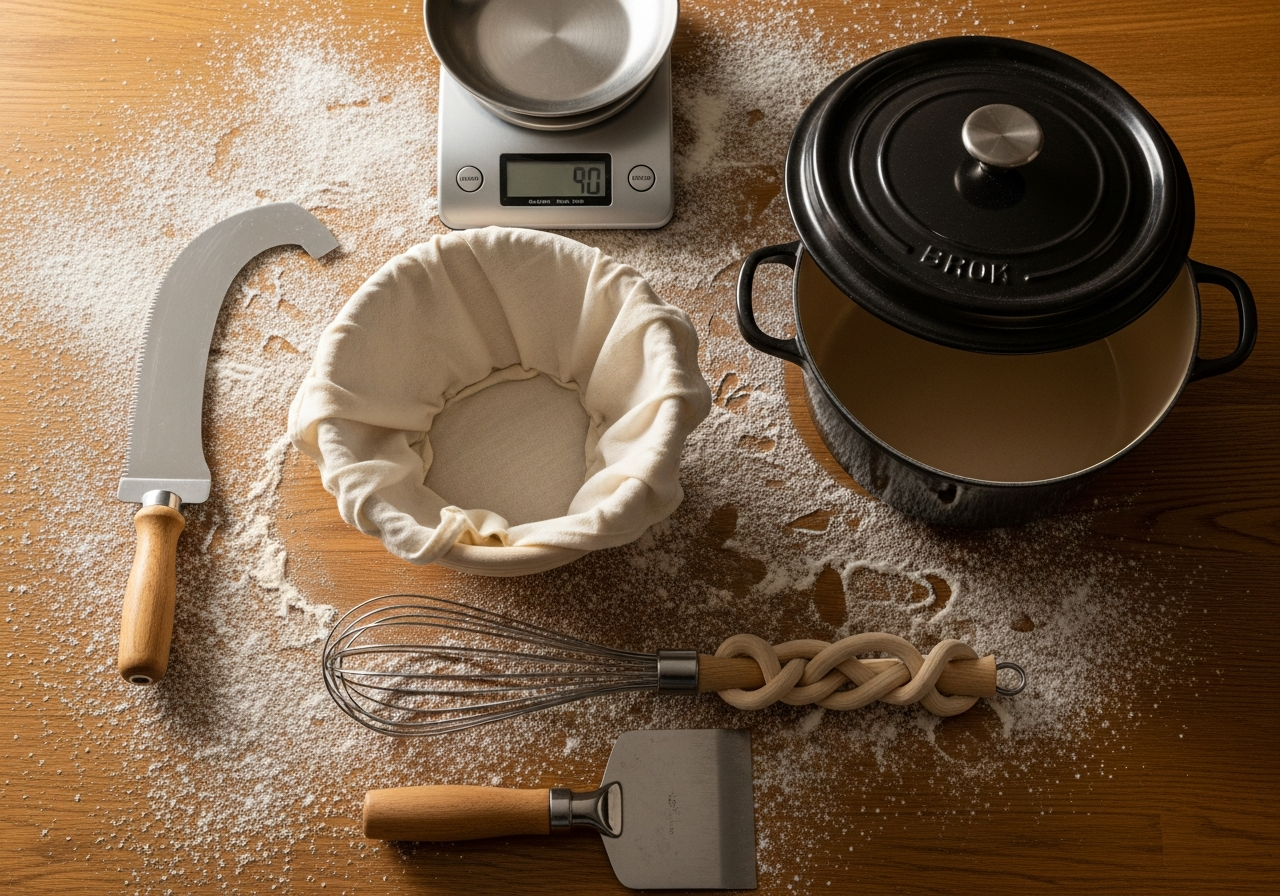
The heart of sourdough is your **starter** — a mixture of flour and water that captures wild yeast. You'll need a **glass jar** to house it and a **kitchen scale** for precise measurements (baking by weight is non-negotiable). A **banneton proofing basket** gives your loaves their classic spiral pattern and supports the dough during its final rise. And a **Dutch oven** is the secret weapon for achieving that crackling, blistered crust.
Tips for Your First Loaf
- Feed your starter consistently — twice a day at room temperature until it doubles reliably
- **Use a kitchen scale** — measuring flour by volume is wildly inconsistent
- Don't rush bulk fermentation — let the dough tell you when it's ready
- Score your loaf with a sharp blade or lame just before baking for a proper ear
- Preheat your Dutch oven for at least 30 minutes at 500°F
Common Sourdough Mistakes
- Giving up on your starter too early — it takes 7-14 days to mature
- Using too much or too little hydration without understanding dough feel
- Skipping the autolyse step — it develops gluten with less kneading
- Opening the Dutch oven too early — steam is what creates the crust