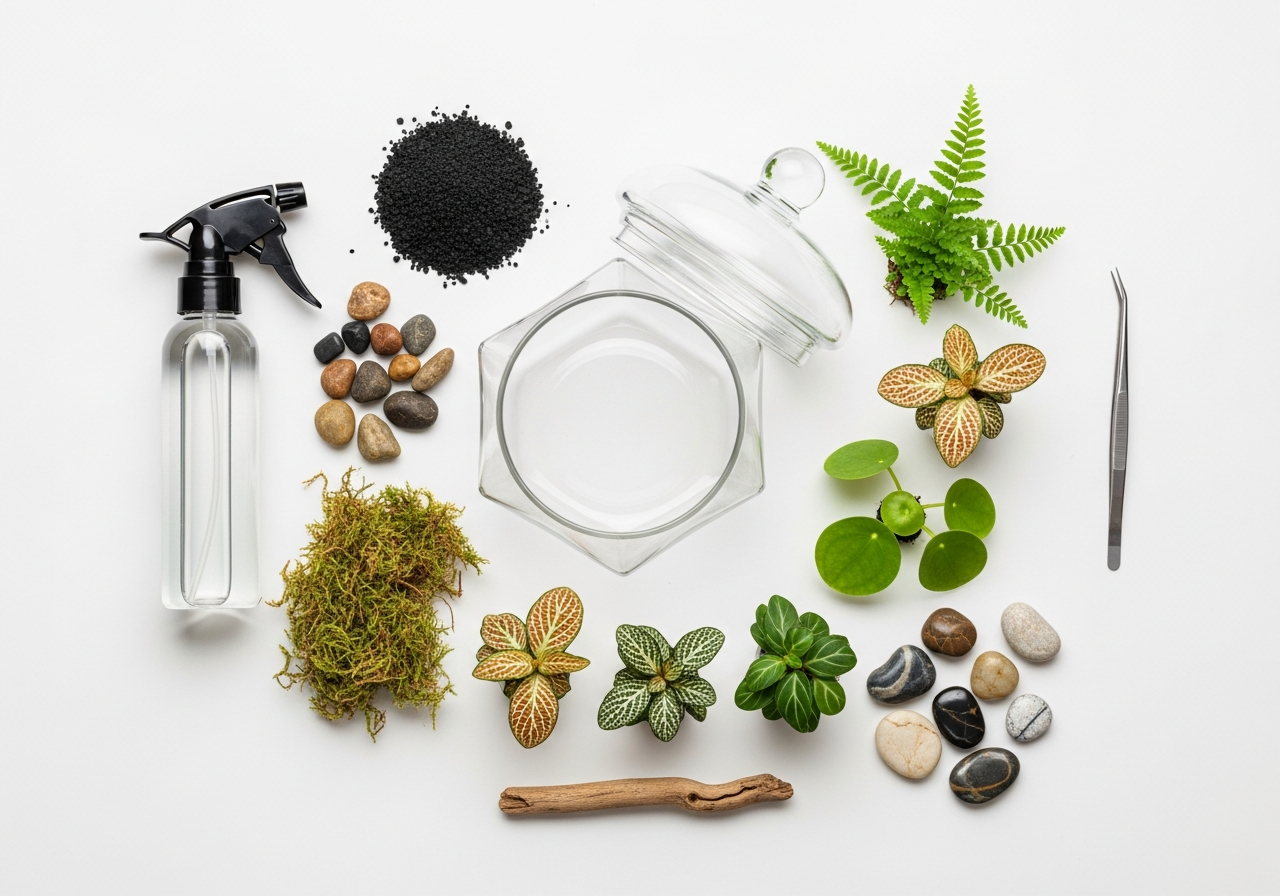
Building Your First Terrarium
Terrariums are miniature gardens enclosed in glass — they're beautiful, low-maintenance, and endlessly customizable. Whether you go with an open terrarium for succulents and cacti or a closed terrarium for tropical plants, the building process is relaxing and the result is a living piece of décor.
Open vs. Closed Terrariums
**Open terrariums** have no lid and work best with plants that like dry conditions — succulents, air plants, and cacti. They need occasional watering and do well in bright light. **Closed terrariums** are sealed environments where moisture recycles through condensation. They're perfect for tropical plants like ferns and moss and require very little maintenance once established.
Layering Is Everything
A terrarium is built in layers, and each one serves a purpose. Start with **drainage stones** at the bottom, then add a thin layer of **activated charcoal** to keep water fresh and prevent mold. Next comes the **substrate** — potting soil or specialized terrarium mix. Finally, add your **plants and decorative elements** like stones, driftwood, or miniature figurines.
Tips for Success
- Choose plants that share similar light and moisture requirements
- **Don't overwater** — terrariums need much less water than regular potted plants
- Place in bright, indirect light — direct sun will cook the plants
- Use long tweezers and a funnel for precise planting in narrow containers
- For closed terrariums, open the lid briefly if excessive condensation builds up
Common Mistakes to Avoid
- Skipping the drainage layer — waterlogged roots will rot
- Using plants that grow too large for the container
- Placing in direct sunlight, especially closed terrariums
- Overwatering — a little goes a long way in an enclosed space