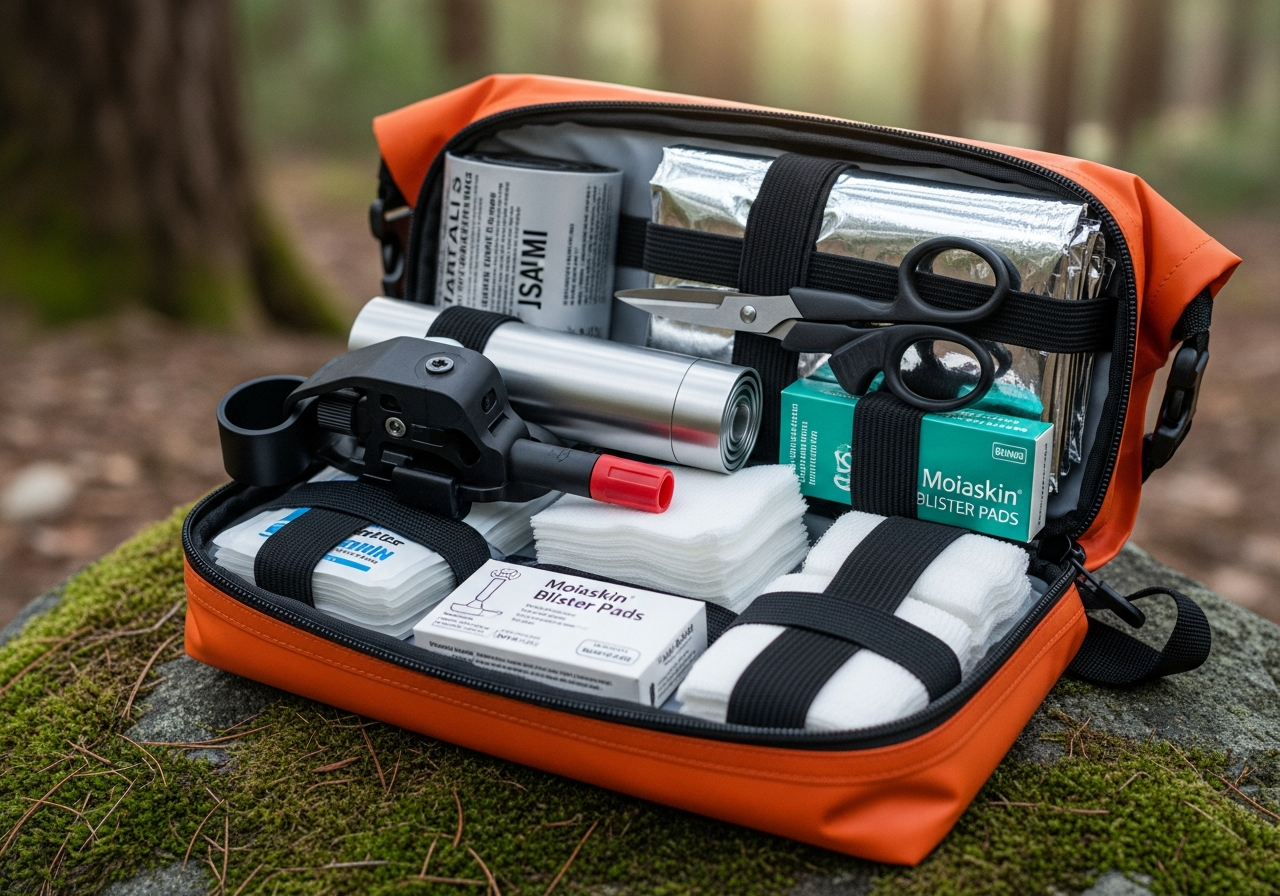
Building a Wilderness First Aid Kit
A trail first aid kit is different from your medicine cabinet. In the backcountry, you need to handle injuries that would normally require an ER visit — sprains, deep cuts, allergic reactions, and hypothermia — with whatever you're carrying.
Essential Wilderness Medical Supplies
- **Wound care**: Hemostatic gauze, butterfly closures, irrigation syringe, and antiseptic
- **Splinting**: SAM splint and elastic bandage for stabilizing fractures and sprains
- **Medications**: Pain relievers, antihistamines, anti-diarrheal, and electrolyte packets
- **Emergency tools**: Emergency whistle, signal mirror, and space blanket
Wilderness First Aid Tips
- Take a Wilderness First Aid (WFA) or Wilderness First Responder (WFR) course
- **Know how to use everything in your kit** — practice before you need it
- Customize your kit for the environment — desert, alpine, and forest have different risks
- Keep medications current — check expiration dates every season
- Pack your kit where you can access it quickly, not buried at the bottom of your pack
When to Evacuate vs. Treat in the Field
- Evacuate for: suspected spinal injury, uncontrolled bleeding, difficulty breathing, chest pain
- Treat in field: blisters, minor cuts, mild sprains, headaches, minor allergic reactions
- When in doubt, evacuate — it's always better to be safe
This wilderness first aid kit gives you the tools to handle emergencies until professional help arrives.