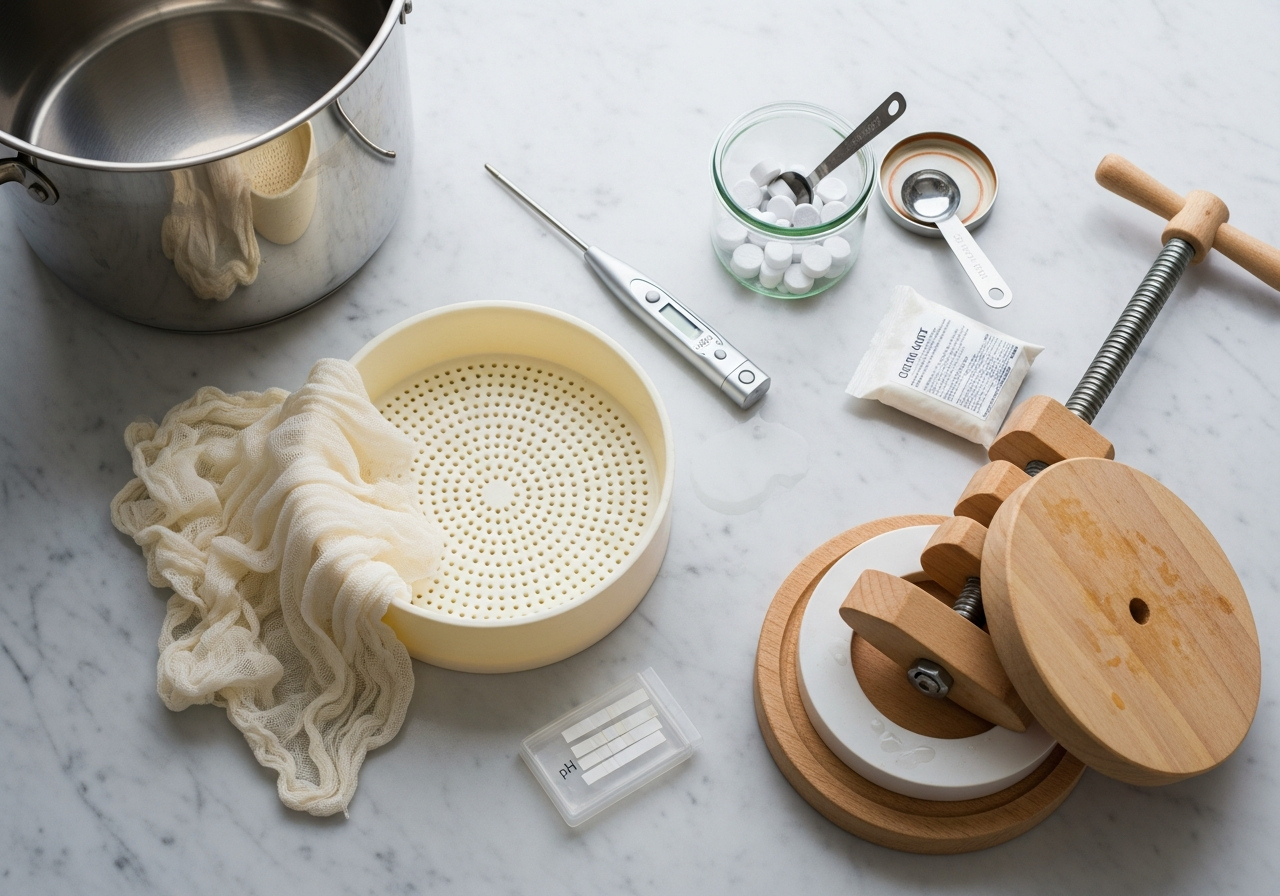
Cheese Making Essentials Checklist — Your Complete Guide
Make fresh mozzarella, ricotta, and more in your own kitchen. Your complete essentials checklist — find out exactly what you need to buy and what can wait.
Cheese making is a centuries-old craft that's surprisingly accessible at home. With just a few specialized supplies and some good milk, you can make fresh mozzarella in 30 minutes or aged cheddar over several months. This starter kit focuses on the essentials for beginners — everything you need to pull your first stretchy ball of mozzarella.
Here is everything included in this bundle at a glance:
Cheese Making Kit ($20 - $35) — Essential
Cheese Thermometer ($8 - $18) — Essential
Stainless Steel Pot ($25 - $50) — Essential
Cheesecloth ($5 - $12) — Essential
Colander ($10 - $20) — Essential
Liquid Rennet ($6 - $12)
Cheese Molds ($10 - $20)
Must-Have Items (5)
These are the core items required to get started. Do not skip these.
Cheese Making Kit — $20 - $35 Beginner kit with rennet, citric acid, cheesecloth, and instructions.
Cheese Thermometer — $8 - $18 Instant-read thermometer for precise temperature monitoring during cheese making.
Stainless Steel Pot — $25 - $50 Large non-reactive pot for heating milk evenly.
Cheesecloth — $5 - $12 Fine-weave butter muslin for straining curds from whey.
Colander — $10 - $20 Fine-mesh colander for draining whey from fresh cheese.
Nice to Have (2)
These optional items improve convenience, presentation, or overall experience.
Liquid Rennet — $6 - $12 Animal or vegetable rennet for coagulating milk into cheese curds.
Cheese Molds — $10 - $20 Food-grade molds for pressing and shaping hard cheeses.
Making Cheese at Home
Few things are more impressive than telling friends you made the cheese on the charcuterie board. Home cheese making is easier than most people think, especially when you start with simple fresh cheeses. Mozzarella, ricotta, paneer, and queso fresco can all be made in under an hour with basic kitchen equipment.
Essential Cheese Making Supplies
The two key ingredients beyond milk are **rennet** (the enzyme that coagulates milk into curds) and **citric acid** (which adjusts acidity for quick cheeses like mozzarella). A **cheese thermometer** is critical — temperature precision is everything in cheese making. **Cheesecloth** or butter muslin strains curds from whey effectively. And a large **stainless steel pot** gives you even heat distribution.
Tips for Beginners
Start with **30-minute mozzarella** — it's the most rewarding first cheese
Use whole milk that is NOT ultra-pasteurized — the proteins are damaged in UP milk
Temperature control is everything — invest in a good thermometer
Don't squeeze curds too hard when draining — gentle handling means better texture
Keep detailed notes on temperatures and timing for each batch
Common Cheese Making Mistakes
Using ultra-pasteurized milk — it won't form proper curds
Heating milk too quickly or to the wrong temperature
Adding rennet at the wrong temperature (aim for 88-90°F for most recipes)
Not letting curds set long enough — patience makes better cheese
Home Cocktail Bar Kit — Stock and equip your home bar to craft professional-quality cocktails.
Kombucha Brewing Kit — Brew your own probiotic-rich kombucha tea at home with this complete starter set.
Mushroom Growing Kit — Grow gourmet mushrooms at home with this beginner-friendly cultivation setup.
Fermentation Starter Kit — Start fermenting vegetables, sauerkraut, kimchi, and pickles at home.
Frequently Asked Questions
What's included in the Cheese Making Starter Kit bundle?
This bundle includes 7 carefully selected items organized by priority: 5 must-have essentials, 2 nice-to-have upgrades, and 0 down-the-road additions.
How much does the Cheese Making Starter Kit cost?
The estimated total for this bundle is $30 - $80. You can buy individual items based on your budget and priorities.
What are the must-have items in this bundle?
The 5 essential items are: Cheese Making Kit, Cheese Thermometer, Stainless Steel Pot, Cheesecloth, Colander.
Can I buy individual items instead of the full bundle?
Yes! Each item links directly to Amazon where you can purchase individually. Start with the must-have items and add nice-to-haves over time.
How are products selected for this bundle?
We research customer reviews, expert opinions, and real-world performance data to select the best products at various price points for each item category.
As an Amazon Associate, BundleMatchly earns from qualifying purchases. Prices are approximate and may change.