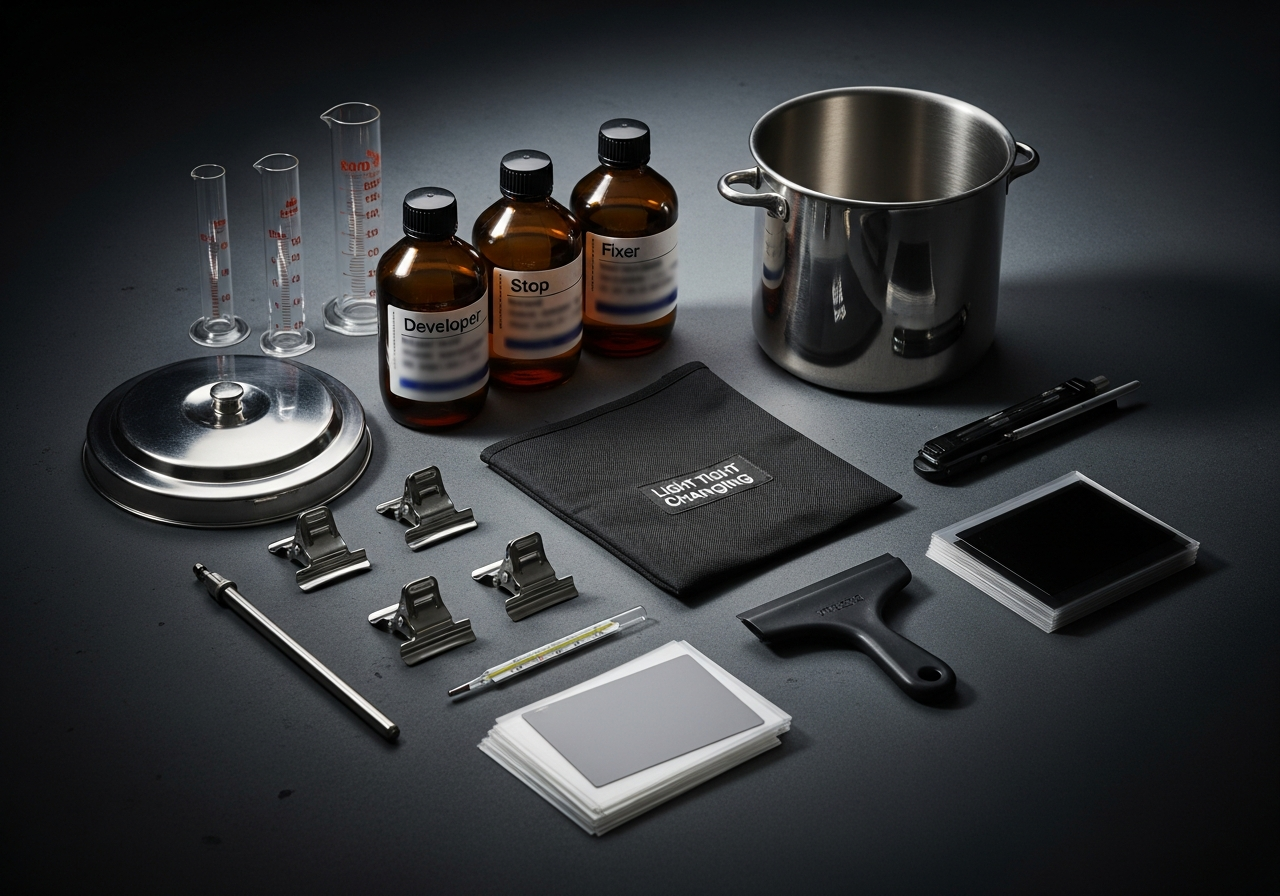
Film Photography & Darkroom Essentials Checklist — Your Complete Guide
Start shooting and developing film with this analog photography starter set. Your complete essentials checklist — find out exactly what you need to buy and what can wait.
Film photography is experiencing a massive resurgence. There's something magical about the intentional, tactile process of loading film, composing a shot, and waiting to see the results. This kit covers everything from a reliable film camera to developing supplies so you can process your own black-and-white film at home.
Here is everything included in this bundle at a glance:
35mm Film Camera ($80 - $200) — Essential
35mm Film Rolls ($20 - $45) — Essential
Film Developing Tank ($20 - $40) — Essential
Film Chemistry Kit ($25 - $50) — Essential
Changing Bag ($15 - $30) — Essential
Film Scanner ($50 - $120)
Negative Sleeves ($8 - $15)
Thermometer ($8 - $18)
Must-Have Items (5)
These are the core items required to get started. Do not skip these.
35mm Film Camera — $80 - $200 Classic manual 35mm SLR camera for learning the fundamentals of photography.
35mm Film Rolls — $20 - $45 Multi-pack of black-and-white and color 35mm film in ISO 400.
Film Developing Tank — $20 - $40 Daylight developing tank with reels for processing 35mm film at home.
Film Chemistry Kit — $25 - $50 Developer, stop bath, and fixer chemicals for processing black-and-white film.
Changing Bag — $15 - $30 Lightproof bag for loading film into developing tanks without a darkroom.
Nice to Have (3)
These optional items improve convenience, presentation, or overall experience.
Film Scanner — $50 - $120 Dedicated film and slide scanner for digitizing your negatives.
Negative Sleeves — $8 - $15 Archival-quality plastic sleeves for storing and protecting developed negatives.
Thermometer — $8 - $18 Precision darkroom thermometer for accurate chemical temperature control.
Why Film Photography is Making a Comeback
In an age of instant digital photos, film photography forces you to slow down and be intentional with every frame. Each roll gives you 24 or 36 shots — no chimping, no deleting, no endless burst mode. The result is a more mindful approach to photography that often produces images with a character digital can't quite replicate.
Choosing Your First Film Camera
You don't need to spend a fortune. Classic 35mm SLRs like the Canon AE-1 and Pentax K1000 are beloved by beginners for their full manual controls, reliable mechanics, and abundant availability on the used market. Point-and-shoot cameras like the Olympus Stylus are great for everyday carry.
Getting Into Home Development
Developing black-and-white film at home is surprisingly simple and deeply satisfying. You need a **developing tank**, **chemistry** (developer, stop bath, fixer), and a **changing bag** for loading film in the dark. The entire process takes about 20 minutes once you get the hang of it.
Tips for Film Beginners
Start with **ISO 400 black-and-white film** — it's versatile and forgiving
Learn the exposure triangle: aperture, shutter speed, ISO
Keep a shot log noting settings for each frame so you can learn from results
Bracket your exposures (shoot at suggested, +1, and -1 stop)
Scan your negatives with a flatbed scanner or dedicated film scanner
Common Mistakes to Avoid
Opening the camera back before the film is fully rewound
Forgetting to set the ISO dial to match your film speed
Rushing the development process — temperature and timing matter
Not fixing for long enough — under-fixed negatives will fade over time
Related Starter Kits
Digital Art Starter Kit — Start creating digital artwork with the right tablet, tools, and accessories.
3D Printer Setup Kit — Everything you need to start 3D printing at home, from printer to filament and tools.
Beginner Photography Kit — Affordable accessories to elevate your photography and protect your gear.
Home Music Production Setup — Record, mix, and produce music from home with this essential studio starter kit.
Artist Starter Kit — Core drawing and sketching supplies for aspiring artists.
Explore Other Starter Kits
Modern Calligraphy Kit — Beautiful pen sets and practice materials to learn modern calligraphy.
Resin Art & Epoxy Kit — Create stunning resin art pieces, jewelry, and coasters at home.
Frequently Asked Questions
What's included in the Film Photography & Darkroom Kit bundle?
This bundle includes 8 carefully selected items organized by priority: 5 must-have essentials, 3 nice-to-have upgrades, and 0 down-the-road additions.
How much does the Film Photography & Darkroom Kit cost?
The estimated total for this bundle is $150 - $400. You can buy individual items based on your budget and priorities.
What are the must-have items in this bundle?
The 5 essential items are: 35mm Film Camera, 35mm Film Rolls, Film Developing Tank, Film Chemistry Kit, Changing Bag.
Can I buy individual items instead of the full bundle?
Yes! Each item links directly to Amazon where you can purchase individually. Start with the must-have items and add nice-to-haves over time.
How are products selected for this bundle?
We research customer reviews, expert opinions, and real-world performance data to select the best products at various price points for each item category.
As an Amazon Associate, BundleMatchly earns from qualifying purchases. Prices are approximate and may change.