Home Emergency Preparedness Essentials Checklist — Your Complete Guide
Be ready for power outages, storms, and unexpected emergencies. Your complete essentials checklist — find out exactly what you need to buy and what can wait.
Emergencies don't announce themselves. Having a well-stocked emergency kit means you're ready for power outages, severe weather, and unexpected situations. This bundle covers the essentials that every household should have on hand.
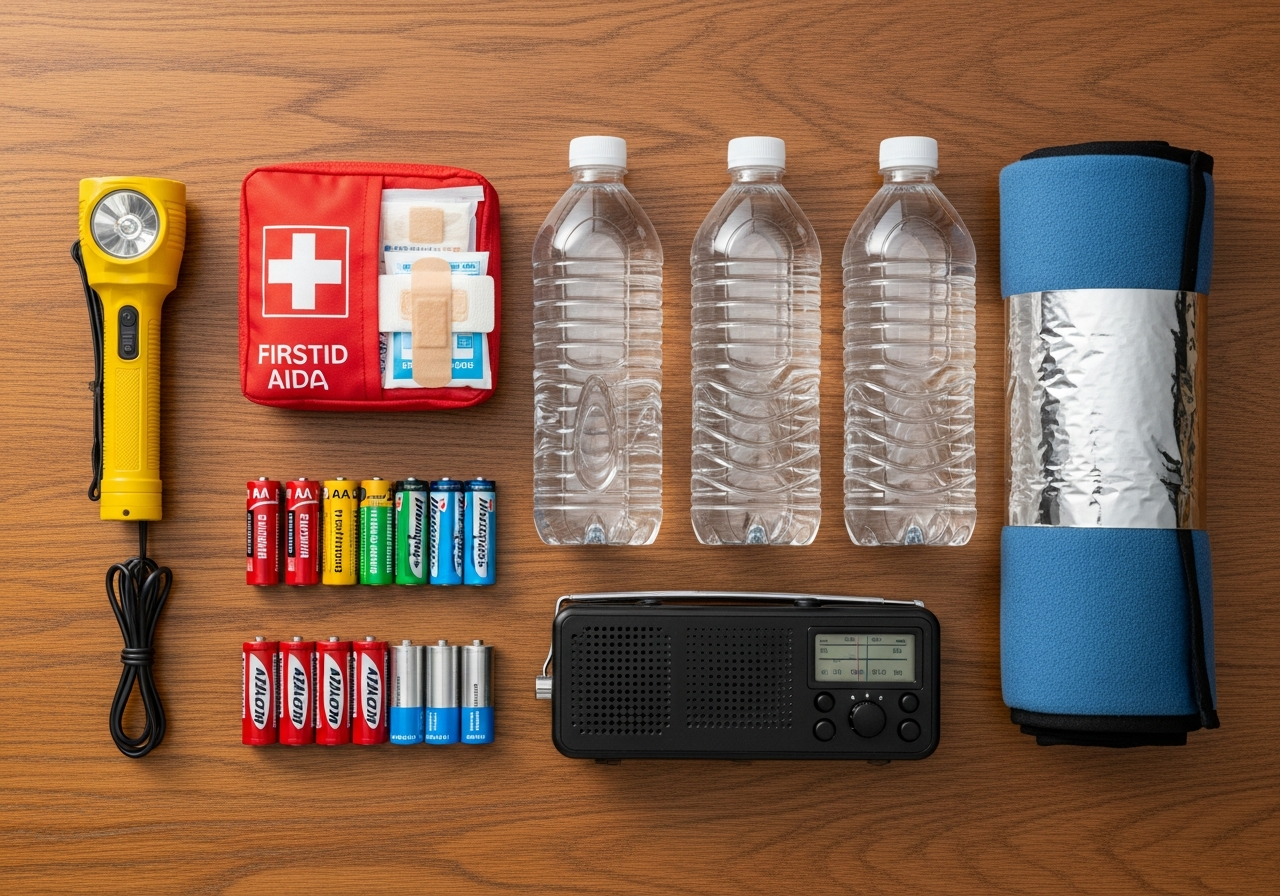
Batteries — $10 - $20 Long-lasting batteries in AA, AAA, C, and D sizes for all your devices.
Emergency Radio — $20 - $40 Hand-crank and solar-powered radio with NOAA weather alerts.
First Aid Kit — $15 - $30 Comprehensive 250+ piece kit for treating cuts, burns, and minor injuries.
Emergency Blankets — $5 - $12 Mylar thermal blankets that retain 90% of body heat.
Power Bank — $20 - $40 High-capacity portable charger to keep phones and devices powered.
Nice to Have (4)
These optional items improve convenience, presentation, or overall experience.
Water Purification Tablets — $8 - $15 Portable water purification for making any water source safe to drink.
Whistle — $5 - $10 Loud emergency whistle for signaling help in an emergency.
Multi-Tool — $20 - $50 Versatile pocket multi-tool with pliers, knife, screwdrivers, and more.
Emergency Food Bars — $10 - $25 Long shelf-life, high-calorie emergency food rations that require no preparation.
The Complete Home Emergency Preparedness Guide
Whether it's a power outage, severe storm, or unexpected emergency, being prepared makes all the difference. You don't need a bunker — just a well-stocked kit with the essentials that keep you safe, informed, and comfortable until normalcy returns.
What Every Emergency Kit Should Include
Start with the basics: a **reliable flashlight** with extra batteries, a **hand-crank or battery-powered radio** for news updates when the power is out, a **first aid kit** for treating minor injuries, and **emergency blankets** that retain body heat. A **power bank** keeps your phone charged for communication, and a **water purification** solution ensures safe drinking water.
Tips for Emergency Preparedness
Store your kit in an easy-to-access location — not buried in the basement
**Check and refresh supplies every 6 months** — batteries expire, medications expire, water should be rotated
Keep a **whistle** on your kit for signaling in an emergency
Include a **multi-tool** for versatile problem-solving
Make sure every family member knows where the kit is stored
Common Mistakes to Avoid
Assuming emergencies won't happen to you — they can happen anywhere
Letting batteries die in storage — check them regularly or use lithium batteries with 10-year shelf life
Forgetting to include medications, copies of important documents, and cash
Not having a plan — a kit is great, but every family needs a meeting point and communication plan
This home emergency preparedness kit gives you peace of mind knowing you're ready for whatever comes.
Related Starter Kits
First Time Homeowner Kit — Essential tools and safety gear every new homeowner should have on hand.
Baby Proofing Kit — Essential safety products to childproof your home before baby starts exploring.
Moving Day Kit — All the packing and moving supplies you need for a smooth move.
Frequently Asked Questions
What's included in the Home Emergency Preparedness Kit bundle?
This bundle includes 10 carefully selected items organized by priority: 6 must-have essentials, 4 nice-to-have upgrades, and 0 down-the-road additions.
How much does the Home Emergency Preparedness Kit cost?
The estimated total for this bundle is $80 - $150. You can buy individual items based on your budget and priorities.
What are the must-have items in this bundle?
The 6 essential items are: Flashlight, Batteries, Emergency Radio, First Aid Kit, Emergency Blankets, Power Bank.
Can I buy individual items instead of the full bundle?
Yes! Each item links directly to Amazon where you can purchase individually. Start with the must-have items and add nice-to-haves over time.
How are products selected for this bundle?
We research customer reviews, expert opinions, and real-world performance data to select the best products at various price points for each item category.
As an Amazon Associate, BundleMatchly earns from qualifying purchases. Prices are approximate and may change.