Leather Crafting Essentials Checklist — Your Complete Guide
Start making wallets, belts, and custom leather goods by hand. Your complete essentials checklist — find out exactly what you need to buy and what can wait.
Leather crafting is a timeless skill that produces durable, beautiful goods you'll use for years. From hand-stitched wallets to custom belts and journal covers, this starter kit gives you the core tools and materials to begin working with leather. The learning curve is gentle — your first project can be a simple card holder that looks professional.
These optional items improve convenience, presentation, or overall experience.
Vegetable-Tanned Leather — $15 - $35 Full-grain veg-tan leather pieces for practice and small projects.
Edge Burnisher — $5 - $12 Wood or plastic burnisher for smoothing and polishing leather edges.
Leather Mallet — $10 - $20 Rawhide or nylon mallet for driving stamps and chisels without damaging them.
Getting Started with Leather Crafting
Leather crafting is one of the most rewarding hands-on hobbies you can learn. Unlike many crafts, the things you make are genuinely useful — wallets, belts, bags, and accessories that last a lifetime and develop beautiful patina with age. The basics are surprisingly simple: cut, punch, stitch, and finish.
Essential Tools for Leather Work
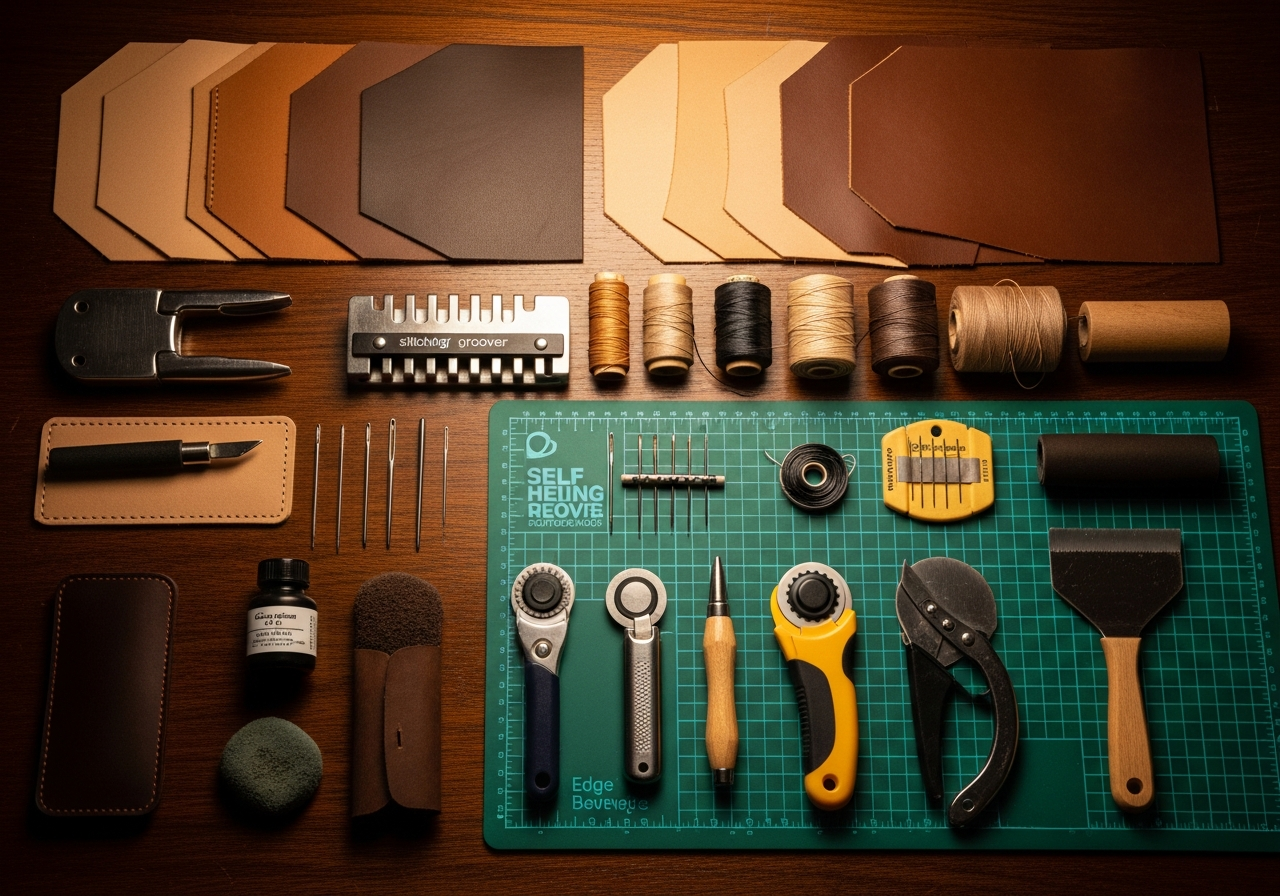
A sharp **rotary cutter or utility knife** is your most important tool — clean cuts are the foundation of good leatherwork. **Stitching chisels** (also called pricking irons) punch evenly spaced holes for hand-stitching with a **saddle stitch** — the strongest stitch in leatherwork. A **cutting mat** protects your table and extends blade life. And **waxed thread** with two needles is how you sew leather by hand.
Tips for Beginners
Start with vegetable-tanned leather in 3-4 oz weight — it's the most versatile for small goods
**Practice on scrap leather** before cutting into your project piece
Use binder clips to hold pieces together while stitching
Burnish edges with water or gum tragacanth for a professional finish
Watch YouTube tutorials from Corter Leather or Weaver Leathercraft
Common Mistakes to Avoid
Using dull blades — they tear rather than cut, ruining edges
Stitching holes too close to the edge — leather tears under stress
Skipping edge finishing — raw edges look amateurish
Buying chrome-tanned leather for tooling projects — it won't hold impressions
Related Starter Kits
Digital Art Starter Kit — Start creating digital artwork with the right tablet, tools, and accessories.
Artist Starter Kit — Core drawing and sketching supplies for aspiring artists.
Can I buy individual items instead of the full bundle?
Yes! Each item links directly to Amazon where you can purchase individually. Start with the must-have items and add nice-to-haves over time.
How are products selected for this bundle?
We research customer reviews, expert opinions, and real-world performance data to select the best products at various price points for each item category.
As an Amazon Associate, BundleMatchly earns from qualifying purchases. Prices are approximate and may change.