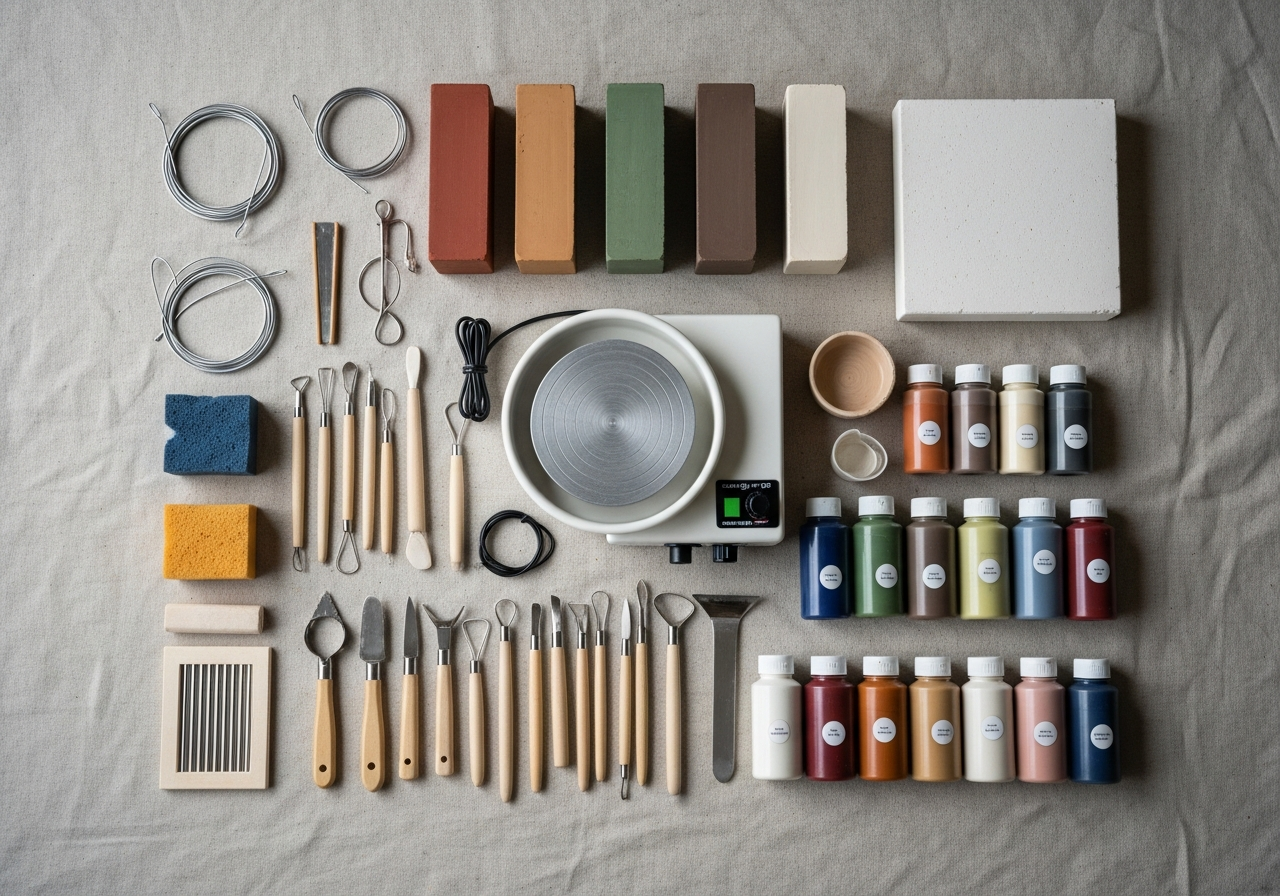
Pottery & Ceramics Essentials Checklist — Your Complete Guide
Begin your pottery journey with essential hand-building tools and clay. Your complete essentials checklist — find out exactly what you need to buy and what can wait.
Pottery is one of the most tactile and meditative crafts you can practice. This starter kit focuses on hand-building techniques — coiling, slab-building, and pinch pots — that don't require a pottery wheel. With quality clay, essential tools, and finishing supplies, you can create functional bowls, mugs, and decorative pieces right at your kitchen table.
Here is everything included in this bundle at a glance:
Pottery Tool Set ($8 - $20) — Essential
Air-Dry Clay ($10 - $25) — Essential
Clay Rolling Pin ($8 - $18) — Essential
Wire Clay Cutter ($3 - $8) — Essential
Sponge Set ($5 - $10) — Essential
Canvas Work Surface ($6 - $14)
Acrylic Paint Set ($8 - $18)
Clear Sealant ($6 - $14)
Must-Have Items (5)
These are the core items required to get started. Do not skip these.
Pottery Tool Set — $8 - $20 Complete set of clay modeling, sculpting, and smoothing tools.
Air-Dry Clay — $10 - $25 Premium air-dry clay that hardens without kiln firing.
Clay Rolling Pin — $8 - $18 Non-stick rolling pin with thickness guides for even slab rolling.
Wire Clay Cutter — $3 - $8 Thin wire with handles for cutting clay blocks and trimming pots.
Sponge Set — $5 - $10 Natural and synthetic sponges for smoothing and moistening clay surfaces.
Nice to Have (3)
These optional items improve convenience, presentation, or overall experience.
Canvas Work Surface — $6 - $14 Non-stick canvas cloth for rolling and shaping clay without sticking.
Acrylic Paint Set — $8 - $18 Acrylic paints for decorating and finishing air-dry clay pieces.
Clear Sealant — $6 - $14 Water-based sealant to protect and add sheen to finished pieces.
Getting Started with Pottery at Home
You don't need a pottery wheel or a kiln to start making ceramics. Hand-building is the oldest and most accessible approach to pottery, and many professional potters prefer it. Techniques like pinch pots, coil building, and slab construction let you create beautiful functional and decorative pieces with just your hands and a few basic tools.
Essential Pottery Tools
A good **pottery tool set** includes wire cutters, ribs, loop tools, and modeling tools for shaping and smoothing. Quality **clay** is the foundation — air-dry clay is perfect for beginners since it doesn't require kiln firing. A **rolling pin with guide sticks** helps you roll even slabs. And a **sponge set** keeps your clay moist while working and smooths surfaces before finishing.
Tips for Beginning Potters
Start with **air-dry clay** to learn techniques without needing kiln access
Keep your clay moist while working — cover unused portions with a damp cloth
Score and slip when joining two pieces of clay — it's the glue of pottery
Let pieces dry slowly and evenly to prevent cracking
Experiment with textures using found objects: forks, fabric, stamps, leaves
Common Pottery Mistakes
Joining clay pieces without scoring and applying slip — they'll crack apart
Making walls too thin — they collapse or crack during drying
Drying pieces too quickly — cover loosely with plastic for slow, even drying
Not wedging clay before use — air bubbles cause cracking
Related Starter Kits
Digital Art Starter Kit — Start creating digital artwork with the right tablet, tools, and accessories.
Artist Starter Kit — Core drawing and sketching supplies for aspiring artists.
Modern Calligraphy Kit — Beautiful pen sets and practice materials to learn modern calligraphy.
Frequently Asked Questions
What's included in the Pottery & Ceramics Starter Kit bundle?
This bundle includes 8 carefully selected items organized by priority: 5 must-have essentials, 3 nice-to-have upgrades, and 0 down-the-road additions.
How much does the Pottery & Ceramics Starter Kit cost?
The estimated total for this bundle is $40 - $100. You can buy individual items based on your budget and priorities.
What are the must-have items in this bundle?
The 5 essential items are: Pottery Tool Set, Air-Dry Clay, Clay Rolling Pin, Wire Clay Cutter, Sponge Set.
Can I buy individual items instead of the full bundle?
Yes! Each item links directly to Amazon where you can purchase individually. Start with the must-have items and add nice-to-haves over time.
How are products selected for this bundle?
We research customer reviews, expert opinions, and real-world performance data to select the best products at various price points for each item category.
As an Amazon Associate, BundleMatchly earns from qualifying purchases. Prices are approximate and may change.