Rock Climbing Essentials Checklist — Your Complete Guide
Essential safety gear and equipment for beginner indoor and outdoor rock climbers. Your complete essentials checklist — find out exactly what you need to buy and what can wait.
Rock climbing is an exhilarating full-body workout that challenges both strength and problem-solving. Whether you're starting at an indoor gym or venturing onto outdoor crags, having the right safety gear is non-negotiable. This starter kit covers the fundamentals — from harness and shoes to belay devices and chalk — so you can climb with confidence.
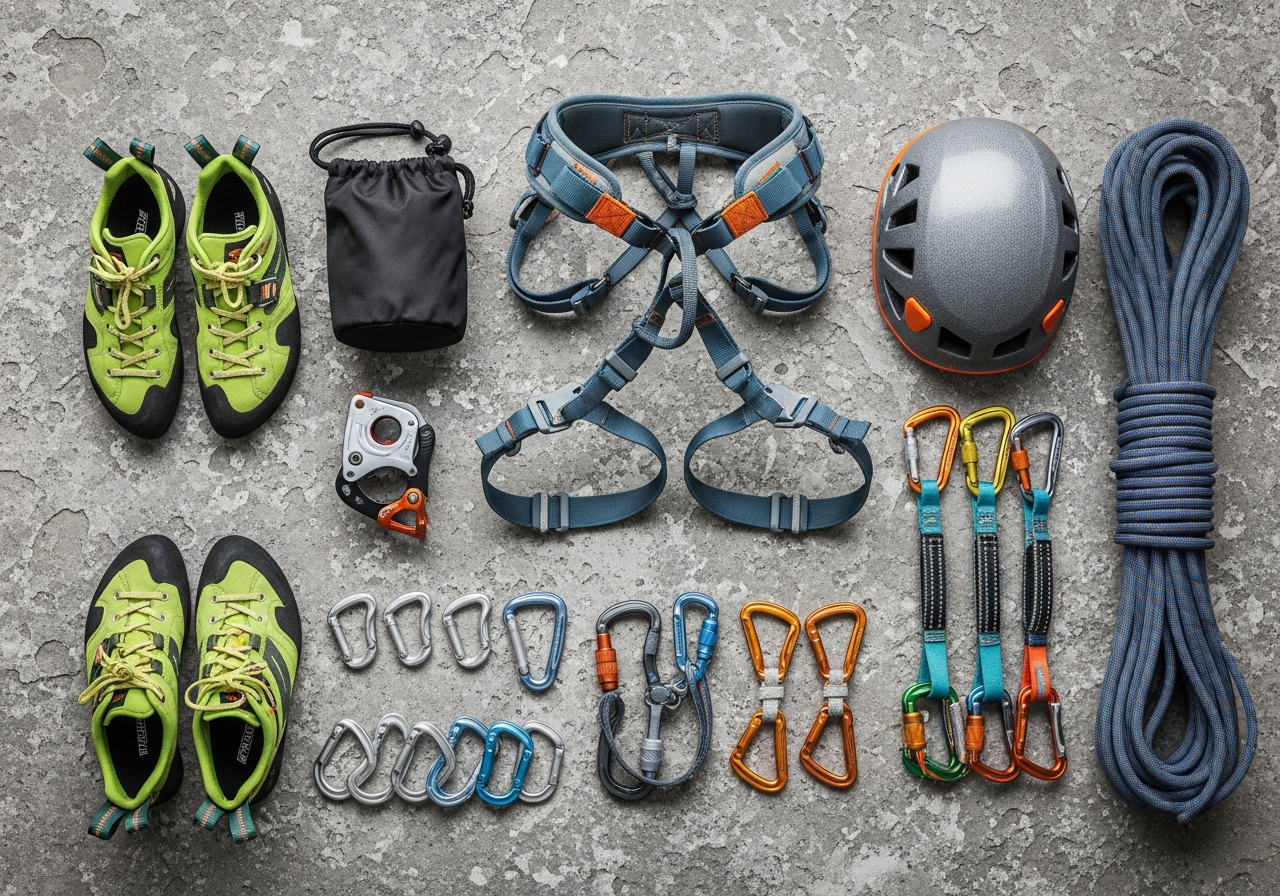
Here is everything included in this bundle at a glance:
Climbing Harness ($40 - $80) — Essential
Climbing Shoes ($50 - $120) — Essential
Belay Device ($20 - $40) — Essential
Locking Carabiner ($10 - $20) — Essential
Chalk Bag & Chalk ($10 - $25) — Essential
Climbing Helmet ($40 - $70)
Climbing Rope ($80 - $180)
Crash Pad ($100 - $200)
Must-Have Items (5)
These are the core items required to get started. Do not skip these.
Climbing Harness — $40 - $80 Comfortable, adjustable harness for top-rope, lead, and sport climbing.
Climbing Shoes — $50 - $120 Snug-fitting shoes with sticky rubber soles for precision footwork.
Belay Device — $20 - $40 Assisted-braking or tube-style belay device for rope management.
Locking Carabiner — $10 - $20 Auto-locking carabiner for connecting belay device to harness.
Chalk Bag & Chalk — $10 - $25 Chalk bag with chalk ball or loose chalk for dry, grippy hands.
Nice to Have (3)
These optional items improve convenience, presentation, or overall experience.
Climbing Helmet — $40 - $70 Lightweight helmet for protection from falls and falling rock.
Climbing Rope — $80 - $180 Dynamic single rope for top-rope and lead climbing outdoors.
Crash Pad — $100 - $200 Thick foam pad for bouldering protection on outdoor problems.
Getting Started with Rock Climbing
Rock climbing has become one of the fastest-growing outdoor sports, and for good reason. It builds incredible strength, flexibility, and mental focus — all while being one of the most fun workouts you'll ever do. Most climbers start indoors at a climbing gym, which is the safest way to learn technique, build strength, and meet climbing partners.
Essential Gear for Beginners
Your **climbing harness** is your most critical piece of safety equipment — it connects you to the rope and catches you when you fall. **Climbing shoes** are a close second — they need to fit snug (but not painful) and have sticky rubber soles for grip. A **belay device** and **locking carabiner** are essential for belaying your partner. And **chalk** keeps your hands dry for better grip on holds.
Tips for New Climbers
Start at a climbing gym — take an intro class to learn belaying and basic technique
**Focus on footwork** — beginners rely too much on arm strength
Climb with people better than you — you'll learn faster
Rest between climbs — tendons and ligaments need time to adapt
Don't skip the warm-up — finger injuries are common and slow to heal
Common Mistakes to Avoid
Buying shoes that are too tight — snug is good, pain is bad
Gripping holds too hard — relax your hands and trust your feet
Skipping leg day at the gym — climbing is a full-body sport
Not learning to fall properly — practice controlled falls at the gym
Related Starter Kits
Kayaking Starter Kit — Essential safety and comfort gear for your first time on the water.
Gardening Starter Kit — Everything you need to start growing your own garden at home.
Frequently Asked Questions
What's included in the Rock Climbing Starter Kit bundle?
This bundle includes 8 carefully selected items organized by priority: 5 must-have essentials, 3 nice-to-have upgrades, and 0 down-the-road additions.
How much does the Rock Climbing Starter Kit cost?
The estimated total for this bundle is $150 - $350. You can buy individual items based on your budget and priorities.
What are the must-have items in this bundle?
The 5 essential items are: Climbing Harness, Climbing Shoes, Belay Device, Locking Carabiner, Chalk Bag & Chalk.
Can I buy individual items instead of the full bundle?
Yes! Each item links directly to Amazon where you can purchase individually. Start with the must-have items and add nice-to-haves over time.
How are products selected for this bundle?
We research customer reviews, expert opinions, and real-world performance data to select the best products at various price points for each item category.
As an Amazon Associate, BundleMatchly earns from qualifying purchases. Prices are approximate and may change.